Fundamentals of Rechargeable Battery Technology
Chemistry families and their characteristics
Across South Africa’s tech scenes, the fundamentals of how rechargeable batteries are made hinge on a simple truth: chemistry determines energy density, safety, and longevity. The core trio—electrodes, electrolyte, and separators—work together to store and release energy efficiently, and a closer look at chemistry families explains why some cells shine in power while others endure longer.
- Lithium-ion: high energy density, long cycle life, common in phones and laptops.
- Nickel–metal hydride: solid mid-range energy, forgiving charging behavior.
- Lead‑acid: economical, robust, heavy—still used for backup power.
- Solid-state: potential for higher safety and energy density, but costly today.
Understanding battery manufacture goes beyond chemistry; it shapes electrode coatings, separators, and quality control steps that keep production safe and scalable in South Africa and beyond.
Electrochemistry principles and how energy storage works
Powering South Africa’s devices and EVs, energy storage runs on a simple, punchy truth: chemistry in motion is what makes a battery deliver power. Global output sits in the hundreds of gigawatt-hours per year and keeps climbing—no drama, just electrons doing the math. The electrochemical dance is straightforward: ions migrate through the electrolyte, electrons race through the external circuit, and the cell responds to charge and discharge.
This is essentially how rechargeable batteries are made—precise electrode coatings, controlled electrolyte filling, and tight quality checks that keep heat in check and performance predictable. The payoff comes from how fast ions move and how the cell withstands cycles.
- Coating electrodes with active materials
- Layering separators to prevent short circuits
- Filling cells with electrolyte and sealing them
All told, the marriage of chemistry and factory discipline yields energy you can rely on—robust, scalable, and unfussy about safety.
Key performance metrics and how they are measured
In the factory glow, numbers sing. Here in SA, metrics steer every step—from electrode coatings to electrolyte viscosity and sealing. Energy density and power density carve how far a cell can go; cycle life and calendar life tell us how many journeys a device can endure; efficiency and safety margins hold the system steady under stress. This is why understanding how rechargeable batteries are made matters when engineers optimize materials and processes.
We track a few core metrics:
- Energy density (specific energy) for range and efficiency
- Power density and rate capability
- Cycle life and calendar life
- Coulombic efficiency and self-discharge
- Thermal safety and abuse tolerance
In practice, measurements use galvanostatic cycling, impedance spectroscopy, rate tests, and thermal monitoring to ensure reliability from lab bench to production line.
Safety and handling considerations in production
Safety is the quiet engine behind every glowing light. In a workshop just outside a Karoo town, a supervisor reminds us that “Safety is not a feature—it’s a foundation.” Understanding how rechargeable batteries are made shapes how teams steward every step, from material handling to worker training.
Fundamental safety and handling considerations in production start with design choices that minimize risk: materials selection, controlled environments, and clear signaling. They shape how we manage heat, containment, and emergency readiness.
- Material handling and storage strategies
- Ventilation and thermal monitoring
- PPE, training, and access control
- Containment and spill response in a controlled setting
Back home in South Africa, these principles travel from the city to the farm shed, where communities see technicians weaving careful routines into everyday work. The result is batteries whose safety margins are as steady as a dawn on the veld.
Materials and Electrode Fabrication
Active materials, binders, and conductive additives
Global demand for rechargeable batteries is set to triple by 2030, and the magic starts at the elemental level. When we unpack how rechargeable batteries are made, the trio at the heart of each cell reveals itself: active materials, binders, and conductive additives. These choices sculpt energy density, lifespan, and safety, turning raw powders into the quiet power behind everyday devices and grid-scale storage.
- Active materials: lithium cobalt oxide, nickel manganese cobalt, lithium iron phosphate, silicon-based hosts.
- Binders: polyvinylidene fluoride, carboxymethyl cellulose, and alternatives that maintain adhesion without drying out.
- Conductive additives: carbon black, carbon nanotubes, graphene to boost electrical pathways.
From slurry to coating and calendering, electrode fabrication fuses chemistry with precision, translating lab insight into durable, scalable energy storage in South Africa.
Anode and cathode preparation and coating technologies
In the theatre of materials, how rechargeable batteries are made hinges on slurry craft, precise drying, and the patient art of calendering. We blend active substances with binders and conductive additives, then spread the mix as a film on copper and aluminum foils. The result is a living tape poised to host the anode and cathode theatres. In South Africa’s accelerating energy landscape, this is where durability and energy density are born from careful formulation!
Anode and cathode preparation demand meticulous coating technologies that lock in structure while allowing ions to flow. The industry favours techniques such as:
- Doctor blade coating
- Slot-die coating
- Spray coating
- Gravure coating
From slurry to dried films and tight calendering, the coated electrodes enter the cell assembly arena where porosity, thickness, and uniformity set the stage for safety, longevity, and dependable energy delivery.
Electrolytes and separators and their roles
In the quiet alchemy of materials science, how rechargeable batteries are made begins with the marriage of electrode films and the delicate paths for ions. Materials and electrode fabrication shape the active layers that ride on copper and aluminum foils, while precise drying and calendering lock in structure without stifling conductivity. In South Africa’s expanding energy landscape, this craft yields durable, high-density cells ready for rooftop storage and grid-scale resilience.
- Electrolytes carry lithium ions and enable swift, smooth transport between electrodes.
- Separators are thin, porous barriers that prevent short circuits while letting ions pass.
- Solid-state or gel electrolytes are increasingly used to boost safety and enable higher energy density in next‑gen chemistries.
Together, these ingredients determine safety margins, cycle life, and performance under South Africa’s variable climates and demand cycles.
Electrode drying, calendering, and quality checks
From Cape Town to Polokwane, the heartbeat of energy storage lies in how rechargeable batteries are made. In the factory light, electrode films are built on copper and aluminum foils, then dried, pressed, and shaped into orderly dancers of ions. Precision in drying temperatures and calendering pressure locks in structure, letting conductivity flourish. This craft yields robust cells—ready for rooftop solar banks and grid resilience across South Africa.
- Controlled drying to evaporate solvent without swelling or cracking
- Calendering to achieve precise thickness and porosity for steady ion flow
- Inline quality checks for coating weight, uniformity, and surface defects
Quality checks extend beyond the press; engineers inspect thickness, uniformity, and surface morphology, mapping how the film will behave in real-world charging and discharging. In South Africa’s growing grid, these checks translate into durable cells that keep rooftop storage stable through cycles of sun and load-shedding.
Materials sourcing, purity, and batch traceability
Materials are the quiet hinge on which every battery turns. In the workshop’s morning light, the integrity of supply determines pace and performance. This is the moment to consider how rechargeable batteries are made.
Key pillars are sourcing, purity, and batch traceability:
- Sourcing from certified suppliers with responsible practices and transparent provenance
- Purity specifications that limit contaminants and ensure chemical compatibility
- Batch traceability through lot numbering, certificates of analysis, and ERP records
South Africa’s growing energy storage sector relies on transparent supply chains, with certificates accompanying every shipment and end-to-end mapping from raw granules to finished cells. That curiosity—how rechargeable batteries are made—shapes audits and partnerships, reinforcing longevity, reliability, and local resilience for rooftop storage and grid stability.
Cell Assembly and Formation Process
Cell design, casing, and sealing methods
Across South Africa’s burgeoning energy-storage sector, more than 60% of everyday devices run on lithium cells, and I swear every cell is a tiny city of chemistry. When you consider how rechargeable batteries are made, the cell design, casing, and sealing methods grab center stage.
- Seam-welded metal cans for rugged durability
- Heat-sealed pouches with gasket layering for flexibility
- Laser-cut lids with pressure vents for safety
Formation cycles are the quiet heartbeat of the process. After assembly, cells go through controlled formation at set temperatures and current rates to build the solid electrolyte interphase and stabilize capacity.
Electrode stacking, winding, and alignment
Cell assembly centers on electrode stacking, winding, and precise alignment—the trio that turns flat materials into a power plant inside a single cell. In South Africa’s growing energy-storage sector, automated stacks stay uniform, guarding against micro-short paths and ensuring consistent energy density. For those curious how rechargeable batteries are made, the process starts with laid-up electrodes and separators, then a careful roll that becomes the cell’s core.
Once the roll is formed, alignment is verified before insertion into the metal can or pouch, and the seal is prepared to endure cycles. The following steps illustrate the flow:
- Stacking electrodes with separators for a tight pack—an element of how rechargeable batteries are made.
- Winding into a cylindrical or prismatic roll
- Aligning the roll with current collectors and the housing
Formation cycles follow, shaping the solid electrolyte interphase and stabilizing capacity as the cell leaves the workshop ready for testing and qualification.
Electrolyte filling, gas management, and sealing
South Africa’s battery lines move with a quiet intensity, turning laid-up electrodes into a tangible power source. The clock ticks as sheets meet separators, and a precisely aligned roll becomes the cell’s core. This is how rechargeable batteries are made—an artful blend of speed and precision.
Formation proper begins with electrolyte filling under a stringent inert atmosphere, the liquid introduced in micro-drops to avoid dendrite formation. Gas management follows: scrubbers and vents keep moisture and solvent fumes at bay while the cell breathes through careful pressure control. Sealing tightens the final horizon, with heat seals and rugged housings that endure cycling and temperature swings.
The essential steps in this stage look like this:
- Electrolyte filling under inert gas to prevent moisture ingress
- Gas management and venting during formation to control pressure
- Sealing and housing integration for cycle durability
Formation cycling, conditioning, and initial impedance checks
On South Africa’s quiet factory floors, energy is born not by fire but by patient breath. A moment in formation can set a cell’s heart beating for years, a stark reminder of how rechargeable batteries are made.
Cell assembly and the formation process unfold like ritual: joined electrodes slip into their casings, then submit to formation cycling, conditioning, and initial impedance checks. Under inert gas, micro-drops of electrolyte wake the layers as temperature and pressure keep their own, watchful vigil.
- Formation cycling: gentle voltage ramps to form the solid-electrolyte interphase and stabilize capacity.
- Conditioning: deliberate rest and light cycling to smooth interfaces and reveal creeping losses.
- Initial impedance checks: measuring resistance to confirm clean, steady ionic pathways.
Module and pack assembly considerations
On South Africa’s factory floors, the air tastes of oil and ozone, a quiet omen of energy born in patient breath. To understand how rechargeable batteries are made, follow a cell from its sterile cradle through the formation of its first stubborn heartbeat.
Cell Assembly and Formation Process Module gathers components in a controlled theatre: stacks and cores aligned with surgical precision, seals pressed, contacts welded. Here, the pack’s childhood begins, with careful handling that guards against micro-damage and thermal drift.
Pack assembly considerations: The finished cells are grouped into modules and enclosures that manage heat, vibration, and safety vents. A well-tuned battery management system guides every action, ensuring consistency across temperatures and terrain—from urban streets to veld-strength winds.
Quality Assurance, Testing, and Safety
Inline inspection, quality control, and statistical methods
Quality on the line isn’t a slogan; it’s a circuit breaker for costly recalls. In high-volume SA factories, inline inspection at every stage catches most defects before a single package ships. The right people track heat, vibration, and dimensional drift as a natural part of the workflow, not a bolt-on afterthought.
Quality assurance, testing, and safety inline inspection rely on a blend of quality control discipline and smart statistics. Calibration, traceability, and batch records keep everyone honest. This is how rechargeable batteries are made.
- Statistical methods such as Cp/Cpk and control charts to monitor process capability
- Sampling plans and AQLs to balance speed with reliability
- Non-destructive testing and inline sensors for material and assembly consistency
Across the board, these checks support energy density and safety without slowing the line to a crawl.
Post-production testing protocols and performance verification
Quality on the line isn’t a slogan—it’s a circuit breaker for costly recalls. Post-production testing and performance verification guard against surprises down the road, catching latent issues before a shipment leaves the plant. In today’s high-volume environment, the line must pass both speed and certainty.
This is how rechargeable batteries are made. After assembly, a calibrated suite of non-destructive tests and functional verifications confirms capacity, impedance, and thermal behavior under stress. We rely on traceable records and disciplined review to ensure every unit performs within spec.
- Capacity and energy retention verification
- Impedance and power delivery checks
- Thermal stability and safety screening
- Mechanical integrity and seal integrity verification
With these post-production checks, QA becomes a living part of the manufacturing rhythm in SA and beyond, not an afterthought.
Safety testing, thermal runaway analysis, and protective systems
This is how rechargeable batteries are made. In our SA plant, quality assurance isn’t a slogan—it’s the line coach that keeps every shift honest. Safety testing guides the process, pushing packs through controlled fault scenarios and measuring responses so a single bad unit doesn’t slip into a shipment. The aim is early detection, repeatable results, and a workflow that treats safety as standard, not luck.
- Thermal runaway analysis to validate thermal management and containment
- Protective systems such as vents, disconnects, and automatic shutoffs
- Traceability and QA documentation ensuring batch-level safety approvals
On this foundation, QA becomes part of the manufacturing rhythm across SA and beyond, delivering safer energy storage with fewer disruptions and happier customers.
Documentation, traceability, and regulatory compliance
QA in our SA plant isn’t a slogan; it’s the line coach that keeps every shift honest. Testing sequences push packs through controlled fault scenarios and capture responses, so one faulty unit never slips through the cracks. Safety documentation reads like a living contract—updated with every batch and aligned to both local standards and international best practice. This is how rechargeable batteries are made!
- Traceability ledger: material origins, batch IDs, and test outcomes
- Regulatory compliance suite: SANAS-aligned audits, safety declarations, and seal integrity proofs
- Audit-ready QA reports: deviations, corrective actions, and verification records
These elements knit transparency into production, reduce downtime, and reassure customers that energy storage in South Africa meets stringent safety and regulatory criteria.
Sustainability, Standards, and Market Trends
Industry standards, certifications, and regulatory landscape
Power networks and devices are tethered to a single truth: sustainability is the engine of resilience. In South Africa, demand for clean energy storage is growing at double digits annually, pushing manufacturers toward closed-loop sourcing and smarter waste streams. That’s why I ask: how rechargeable batteries are made and what that means for people, planet, and profits.
Standards and certifications shape every step—from raw materials to end-of-life handling. Here, the regulatory landscape is tightening, with SABS and international bodies setting rigorous safety, performance, and environmental criteria. Adherence isn’t a burden; it’s a market differentiator. The following touchpoints keep supply chains transparent:
- South Africa’s SABS/SANS standards and local compliance
- IEC safety and performance standards for cells and modules
- Global e-waste, recycling, and circular-economy regulations
Audits and batch traceability become routine rather than rare events!
In South Africa, incentives for local manufacturing accelerate these market shifts today.
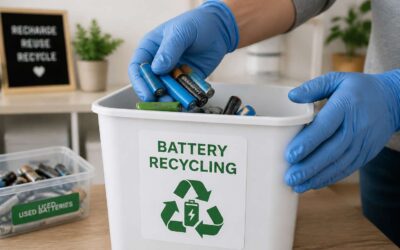
Recycling, end-of-life, and circular economy considerations
Sustainability governs every decision in the battery supply. In South Africa, clean energy storage demand is rising at double digits, shaping local practices and global partnerships! Understanding how rechargeable batteries are made reveals how resource efficiency and waste minimization are built into each step, from materials sourcing to end-of-life thinking.
Standards and market trends converge here: SABS/SANS compliance, IEC safety criteria, evolving e-waste regulations push for transparent, circular pathways. Audits and batch traceability become routine, not exceptions, as incentives nudge companies toward closed-loop sourcing and smarter waste streams.
- End-of-life channels include recycling, refurbishing, and material recovery
- Producer-responsibility schemes align incentives with environmental goals
- Material circularity lowers risks and boosts long-term profitability
In this light, the circular economy isn’t a niche—it’s the operating system that supports people, planet, and profits while keeping energy storage secure and affordable. The question of how rechargeable batteries are made shapes policy and practice around circularity.
Emerging chemistries and next-generation materials
Power security in South Africa is no longer optional; it’s a design imperative. Sustainability runs through every choice—from material sourcing to lifecycle thinking—and pushes manufacturers toward leaner, smarter processes. Understanding how rechargeable batteries are made reveals how resource efficiency and waste minimization are embedded in each step!
Standards anchor trust as market demand grows. A resilient data trail, risk-aware governance, and nimble compliance structures shape product design and supplier relationships. Local and international norms drive audits, certifications, and regulatory alignment, keeping pace with rapid shifts in technology and consumer expectations.
- Transparent supply chains
- Audits and certifications
- End-of-life governance
Emerging chemistries and next-generation materials redefine performance goals. Solid-state and lithium-sulfur contenders, sodium-ion variants, and advanced coatings promise higher safety and longer lifecycles, even as supply chains adapt to new mineral realities. The landscape keeps evolving, inviting curiosity and prudent investment.
Manufacturing automation, smart factories, and future outlook
South Africa’s grid resilience hinges on storage that can outpace outages, and the story begins long before the first cell is lined up on a production line. Understanding how rechargeable batteries are made reveals how resource efficiency and waste minimization sit at the core of each step.
- Transparent supply chains
- Audits and certifications
- End-of-life governance
Standards anchor trust as demand grows. A resilient data trail, risk-aware governance, and nimble compliance structures shape product design and supplier relationships.
Market trends point toward manufacturing automation and smart factories that connect rural workshops with global supply chains. In South Africa, this future outlook means more local capability, digital twins, and an emphasis on safety and traceability.


0 Comments