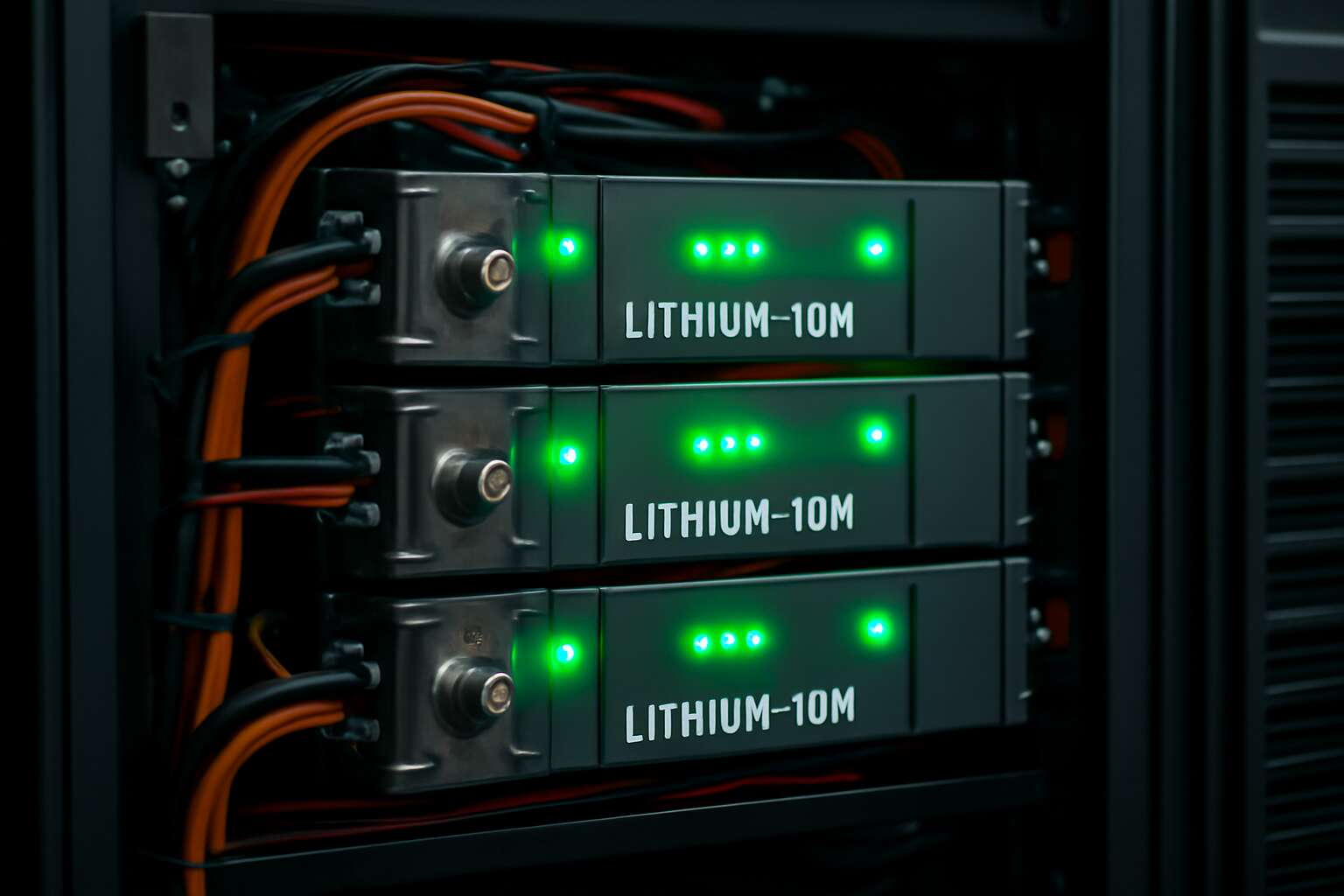
Understanding lithium batteries for UPS
What are lithium batteries for UPS
Outages can cost operations in seconds. A facility manager told me, “Power is the quiet backbone of business,” and that truth rings loudly when lights fail. The lithium batteries for ups step in as the steadying force, delivering instant energy and peace of mind.
These cells are lightweight, high-density energy packs forged to slip into standard UPS enclosures without the heft of older chemistries. They offer longer cycle life, faster recharge, and lower maintenance, making them cost-effective in the long run. In South Africa’s climate, tempering the temperature preserves capacity and reliability.
Consider these advantages:
- Longer cycle life and deeper discharge tolerance
- Greater energy density for the same footprint
- Faster recharge and smarter management
They fit neatly with existing UPS ecosystems, supporting loads from small offices to critical sites. In SA, heat resilience and quick response help keep downtime at bay when the grid strains.
Key advantages over traditional lead-acid
Outages cast long shadows over operations, yet a quiet revolution powers back to life with a whisper. In South Africa’s sun-scorched climate, lithium batteries for ups slip into enclosures with the lightness of a fable and the precision of a metronome, delivering energy exactly when it’s needed.
Where lead-acid drags its feet, these cells leap ahead—offering a steadier heartbeat, smarter thermal behavior, and a calmer maintenance cycle. I’ve seen them respond faster to demand, tolerate higher temperatures better, and free facilities from frequent watering and venting rituals.
- Lightweight and space-efficient, easing retrofits and expansions
- Reliable performance in warm SA climates with stable capacity
- Minimal maintenance, lower total cost of ownership
Together, this blend of speed, resilience, and simplicity keeps the lights on where it matters, turning potential downtime into a mere rumor.
Common chemistries used in UPS applications
Understanding lithium batteries for ups begins with a simple truth: reliability travels on chemistry. In this space, LiFePO4 (LFP) offers safety and thermal stability; NMC blends maximize energy density; and LiMn2O4 endures warmth with grace. Each chemistry writes a rhythm of discharge and cycle life, so the right mix depends on how often you cycle energy and how hot your enclosure runs. Lithium batteries for ups gift a calm heartbeat to the room.
- LiFePO4 (LFP): safe, stable, long life
- NMC: high energy, flexible temp
- LiMn2O4: strong at heat
Here are the highlights that influence performance and longevity:
In SA’s sun-drenched environments, these chemistries align with enclosure design and cooling strategies. The choice hinges on safety, space, and price; LFP favors safety and longevity, while NMC offers compact energy. For many SA sites, lithium batteries for ups are about balance—weight, heat, and serviceability.
Safety considerations and handling guidelines
Power reliability in South Africa’s data rooms depends on more than hardware—it’s a matter of safety as a foundation for uptime. Safety isn’t a feature; it’s the quiet guardian of performance. Understanding lithium batteries for ups begins with one truth: their behavior changes with temperature, enclosure design, and how they are treated when time demands power most.
- Environmental and containment considerations: temperature, ventilation, and enclosure design shape safety outcomes and failure risk.
- System compatibility: matching chemistries with the right BMS, chargers, and cabling reduces thermal stress and fire risk.
- Emergency readiness: containment, detection, and trained response minimize impact when anomalies occur.
In South Africa, enclosure strategy and cooling influence safety margins and long-term reliability. With a thoughtful approach, risk stays a measured variable rather than a looming threat.
Lifecycle, maintenance, and replacement planning
Lifecycle wisdom is the quiet backbone of uptime. In the world of lithium batteries for ups, every cycle teaches a lesson about balance between charge, temperature, and time. The right plan treats performance as a living system, not a one-time install. This mindset keeps data rooms humming and stakeholders confident!
These are the lifecycle moments that matter:
- Installation and commissioning checks that align with the unit’s heat envelope.
- Regular health assessments, capacity tracking, and BMS calibration.
- Pre-planned replacement windows to avoid unplanned outages.
In South Africa, the enclosure strategy and cooling influence reliability; align with local power quality, regulatory expectations, and vendor support. A rolling replacement schedule should be based on projected degradation, battery chemistry, and warranty.
Performance and compatibility for lithium batteries in UPS
Capacity and runtime expectations
In a country where outages are a stubborn fact of business life, uptime is currency you cannot fake. Yesterday’s fear: ‘lithium batteries for ups’ quietly deliver more usable energy and quicker recovery. I’ve seen systems breathe easier when runtimes match real workloads.
Performance and compatibility hinge on a few realities—capacity under load, stable voltage, and smooth communication with the UPS controller.
- Higher energy density for longer runtimes.
- Consistent voltage across fluctuating temperatures.
- Responsive recharge and good cycle life.
For South African operations, that compatibility translates into predictable capacity and a confident capacity-to-runtime curve for critical loads in facilities across the country.
Charge and discharge behavior
In a country where outages stalk the corridors of business, performance is not a luxury but a shield. I’ve watched dashboards blink to life as lithium batteries for ups answer the call with quiet, relentless energy, even as tempers flare in the switchgear.
Charge and discharge behavior is the heartbeat of compatibility: higher energy density means longer runtimes; stable voltage persists under load and across fluctuating temperatures; recharge is brisk enough to catch the next cycle without starving the critical loads.
- Rapid response to load transients
- Voltage stability across temperature swings
- Reliable communication with the UPS controller
For South African operations, that compatibility translates into a predictable capacity-to-runtime curve for critical loads across facilities.
Thermal management and environmental requirements
Performance isn’t a luxury; it’s the shield guarding South Africa’s 99.99% uptime targets. When the grid deserts the corridor, lithium batteries for ups answer with quiet, relentless energy, keeping voltage steady as temperatures rise and fall. Compatibility is the heartbeat: higher energy density extends runtimes, stable voltage endures under load and across ambient swings, and recharge is brisk enough to catch the next cycle without starving critical loads.
- Thermal management: active cooling, airflow optimization, and heat sinking
- Environmental requirements: operating temperature 0–45°C, humidity 20–90%, and proper ventilation
- UPS-controller communication: robust data links and health monitoring for swift action
In SA facilities, this balance translates into reliable operation even in heatwaves and humid coastal climates.
UPS inverters and system compatibility
Uptime in South Africa isn’t optional—it’s a lifeline. A minute of outage can cost facilities tens of thousands in lost productivity. That’s why lithium batteries for ups deliver quiet, relentless energy, keeping critical loads alive when grid gaps widen.
Performance here means steady voltage under load, longer runtimes thanks to higher energy density, and recharge cycles fast enough to catch the next demand spike without starving essential equipment.
System compatibility is the heartbeat of reliability. In SA, where heatwaves and humid coastal air press equipment, I’ve seen how a UPS that communicates seamlessly with its controller and BMS turns resilience into routine.
- Inverter and rack compatibility
- Robust UPS-controller data links
- Stable charging profiles across ambient temperatures
- Real-time health monitoring and alerts
That synergy lets facilities ride through weather quirks and load-shedding with confidence.
Sizing and selection for lithium batteries in UPS
Calculating required capacity and runtime
Sizing a UPS isn’t mysticism, it’s math with attitude. ‘Size it right, or the lights write your name in the dark,’ quips a sharp SA technician. For lithium batteries for ups, start with the worst-case load and the required runtime. Multiply the total load (kW) by the hours of autonomy, then pad for inverter efficiency and a sensible depth of discharge. The result is a starting capacity in kWh that sets the floor for your battery bank.
- Load profile and peak demand
- Target runtime and safety margins
- Inverter compatibility and DoD limits
- Thermal, space, and weight constraints
From there, translate capacity into a pack layout that fits your cabinet and maintenance plan. A careful sizing and selection process saves money and headaches when Eskom trips return, and keeps your operations humming along.
Choosing chemistry and form factor
Sizing and selection for lithium batteries for ups isn’t guesswork; it’s math with a conscience! In South Africa’s grid volatility, the right chemistry and form factor are lifelines for essential loads.
Chemistry and form factor must balance runtime, space, and heat. For lithium batteries, consider LFP for longevity or NMC when higher energy density matters. Match the pack to your cabinet and service plan.
- Compatibility with UPS inverters
- Space, heat, and ventilation constraints
A modular layout keeps maintenance simple and future expansion doable. Ensure the fixed limits align with your inverter voltages and room constraints.
Future-proofing and scalability
Future-proofing a UPS isn’t a crystal ball moment but a deliberate act of design rhythm. In South Africa, where outages and volatility are part of the landscape, lithium batteries for ups shift the horizon toward certainty—register a plan that grows with your needs, adding capacity with modular packs that slot into a standard cabinet without rewiring the room.
Size the system with an eye to future loads and available ventilation. A modular layout keeps maintenance simple and future expansion doable. Ensure fixed limits align with your inverter voltages and room constraints.
- Incremental capacity by swappable packs that fit your cabinet
- Standardized connectors that ease upgrades and service
Done right, the architecture breathes with you: it scales gracefully, preserving space discipline and thermal margins. This is where lithium batteries for ups stay ahead of evolving demand, safeguarding essential loads and offering a path to future-ready reliability.
Total cost of ownership and ROI
Certainty is the first luxury of a resilient business! In South Africa’s volatile grid, sizing a UPS with lithium batteries for ups isn’t guesswork; it’s a design rhythm that honors future demand. Start by looking ahead: how will loads grow, and how much cabinet space and ventilation can you spare? A thoughtful approach lets modular packs be added without rewiring the room, keeping your footprint calm amid the storm.
- Projected load growth over the system life
- Available cabinet space and thermal headroom
- Inverter compatibility and fixed-voltage limits
Total cost of ownership and ROI emerge when you weigh upfront spend against long-term savings: longer calendar life, reduced maintenance, and steadier uptime. The value of this choice becomes a disciplined balance of reliability and economy.
Installation, safety, and lifecycle management
Site preparation and installation best practices
Power outages in South Africa can stretch for hours; your uptime hinges on smart site prep. For lithium batteries for ups, start with a clean, dry, well-ventilated space, away from heat sources and direct sun. Mount on non-combustible surfaces with ample clearance for service. That’s where smart installation counts!
Safety is non-negotiable: train staff, wear PPE, and install according to local regulations. Use a dedicated enclosure to control dust and moisture, and ensure accessible disconnects. Align installation with South African electrical regulations to support reliability and insurer confidence.
- Dedicated enclosure for dust and moisture control
- Proper spacing and airflow for cooling
- Clear cable routing and strain relief
- Accessible disconnects and fire safety provisions
Lifecycle management for lithium batteries for ups centers on monitoring, temperature control, and end-of-life planning. Monitoring temperature drift, state of charge, and cycle count informs replacements, while detailed installation documentation supports audits and ongoing service contracts.
Safety standards certifications and handling
In South Africa, outages often stretch into hours, and uptime becomes priceless. For lithium batteries for ups, safety and certification are the spine of every installation. When teams align with recognized standards and local regulations, downtime shrinks and confidence grows.
- IEC 62619 for lithium-ion cells and batteries
- IEC 62368-1 for ICT safety
- UL 1973 and UL 9540A for energy-storage-system safety and fire resilience
- SABS/SA National Standards compliance and local regulatory alignment
Handling and maintenance depend on training, PPE, and documented procedures. Use dedicated enclosures to control dust and moisture, ensure accessible disconnects, and follow SA electrical regulations. End-of-life planning and certified recycling routes close the loop responsibly.
Maintenance, testing, and end-of-life disposal
Uptime in a country of rolling load-shedding is a quiet currency, and lithium batteries for ups are the minted coin. In South Africa, every blackout wears a clock, and the right system turns hours of darkness into minutes of assurance, whispering reliability back into the streets.
Installation, safety, and lifecycle management unfold like a ritual. Thoughtful siting, tidy enclosures, and trained teams set the stage for long, harmonious operation. Ongoing maintenance and testing of lithium batteries for ups safeguard performance, while end-of-life disposal is handled with dignity and respect for the environment.
A measured cadence keeps the installation honest and alive.
- Periodic health checks
- Certified recycling routes
Warranty and service considerations
Reliability isn’t luck—it’s a crafted ritual that keeps lights on when the grid wobbles. In South Africa, outages can stretch into hours, turning a quiet street into a corridor of anticipation.
Installation, safety, and lifecycle management for lithium batteries for ups unfold like a careful rite: deliberate siting, sturdy enclosures, and trained teams set the stage for long, harmonious operation. Ongoing maintenance and periodic testing safeguard performance and readiness for whatever load-shedding throws at you.
Warranty and service considerations form the backbone of confidence, balancing upfront choice with long-term support. Seek manufacturer-backed warranties, certified installers, and a local SA service network that can respond swiftly. Remote monitoring and scheduled service windows keep the system reliable, day after day.
- Warranty coverage and duration
- Authorized SA service network
- Remote diagnostics and proactive maintenance




0 Comments