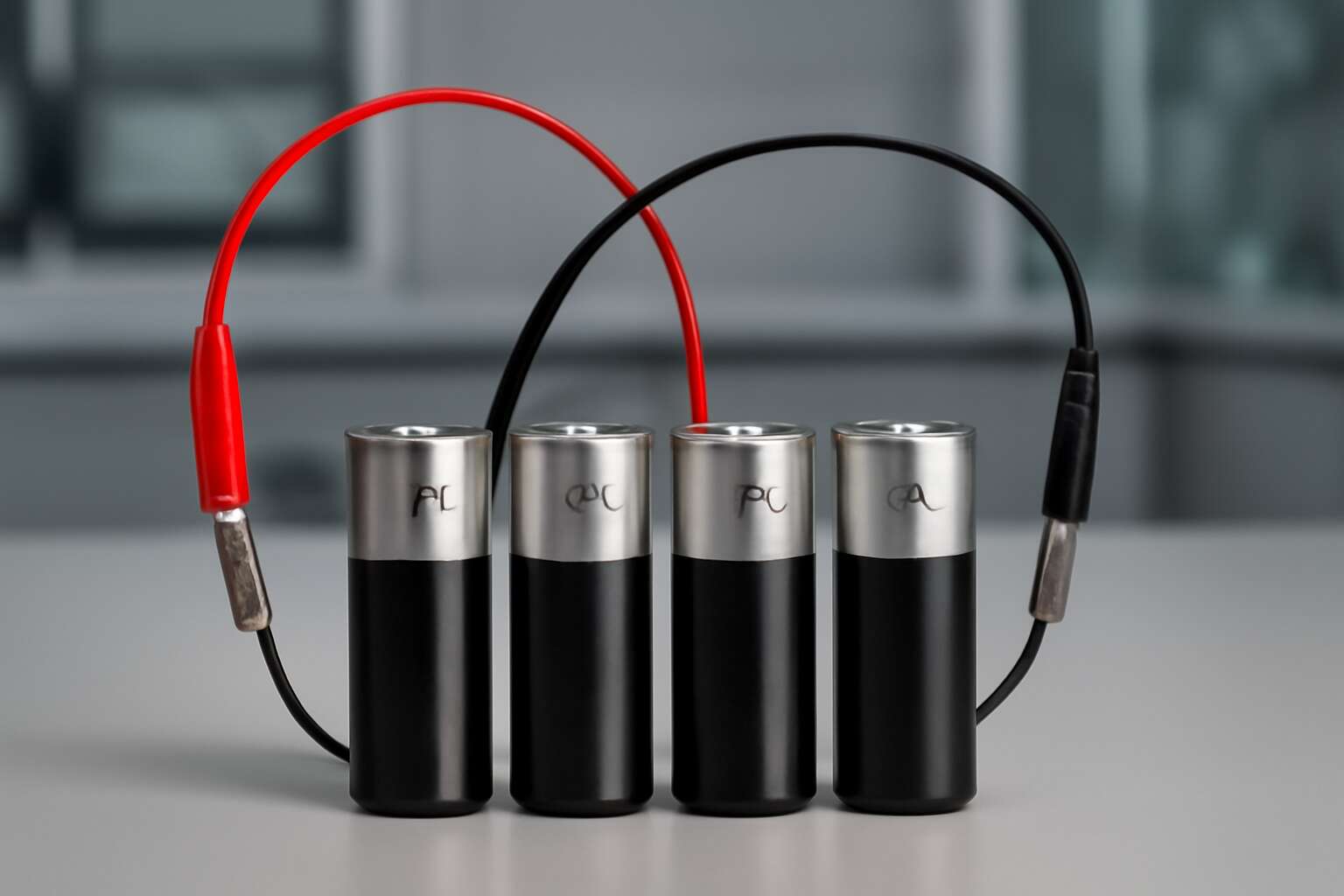
Series-Connected Battery Configurations
Definition and basic concept
Imagine a battery bank that climbs to 48 volts with a single string, keeping lights on when the grid falters. Series-Connected Battery Configurations stack voltages like a staircase, delivering higher output while the capacity remains constant. In practical terms, this means a single string can power brighter loads and simpler architectures for off-grid storage. The phrase batteries series connection captures this idea with clarity and purpose.
- In series, voltages add up while capacity stays the same.
- Cell matching and aging should be similar to avoid imbalance.
- Strings can be paralleled to increase total capacity with careful management.
- Higher voltage strings demand attention to safety and fusing.
Around South Africa’s sun-drenched landscapes, this configuration supports reliable solar storage, offering steady voltage and calm discharge for homes, farms, and microgrids alike.
Voltage and capacity changes in series
Voltage can feel like a heartbeat for a home powered by sun and storage. In the realm of batteries series connection, every added volt tightens reliability, letting lights ride through a cloudy day. A single string can drive brighter loads while keeping wiring simple and predictable, a quiet force behind steady performance across South Africa’s sunny landscapes.
- Voltage adds up with each cell in the string, delivering higher output.
- Capacity remains constant per string, so total energy grows with more strings rather than longer ones.
- Cell matching and aging must be monitored to prevent imbalance.
- If you parallel strings to raise capacity, enforce careful management and balancing.
For South Africa’s homes, farms, and microgrids, this approach provides steady voltage and calm discharge, even when the grid wavers.
Safety considerations for series wiring
Resilience is a quiet force—a calm that keeps the lights on when the clouds gather. In batteries series connection, safety isn’t a checklist; it is the engine of reliability. A well-managed string reduces surprises and protects the broader system, especially for South African homes, farms, and microgrids that lean on sun and storage to steady the day.
To safeguard that balance, consider these essentials:
- Match cells by chemistry and aging to prevent imbalance.
- Use proper protection: fusing, enclosure, and a monitoring system that tracks voltage and temperature across the string.
- Avoid mixing different chemistries or markedly different health across cells within the same string.
Doing so supports predictable discharge and long-term performance in SA’s energy landscape.
Common use cases and examples
In a sun-burnished SA home, a string of cells hums quietly, turning sunlight into security. Batteries series connection is the bridge between PV panels and a reliable day, letting a single string deliver the voltage your inverter expects and the storage your family depends on.
Common use cases for series-connected configurations span compact residential bundles to broader rural microgrids. The goal is a predictable balance of voltage and capacity across the system:
- Residential rooftop systems that pair with a higher-voltage string to optimize inverter performance
- Rural microgrids powering schools and clinics by storing daytime energy for evening use
- Agricultural irrigation pumps requiring steady voltage over long operating windows
Across SA’s energy landscape, this approach translates sunshine into reliable power with grace and resilience.
Choosing the right batteries for a series setup
Sunlight writes a slow-fire script across your walls, and within that script a string of cells keeps time. In South Africa’s sun-soaked towns, batteries series connection offers a quiet, dependable heartbeat for homes. “Storage turns daylight into evenings you can count on,” a veteran installer says. When the strings stay balanced, one well-tuned line can deliver the voltage your inverter expects and the energy your family relies on.
Choosing the right batteries for a series setup means aligning several quiet, persistent details. Consider these essentials:
- Voltage and capacity alignment so every cell in the string contributes evenly
- Identical chemistry and similar aging to avoid imbalances creeping in
- A compatible BMS and thoughtful thermal management to protect performance
In SA’s evolving energy tapestry, a well-chosen pairing—batteries series connection—turns a row of cells into a chorus from dawn to dusk, delivering reliable power for everyday life.
Electrical characteristics and calculations
Understanding voltage, current, and capacity in series
“Energy isn’t a luxury here; it’s bread and light,” a rural SA installer likes to say, and it sticks with me as I draft this piece. In a batteries series connection, voltages add up while current stays fixed, shaping how a homestead stays lit from dusk to dawn.
Key calculations at a glance:
- V_total is the sum of each cell’s voltage.
- I_series is the same through every cell.
- Capacity_in_series equals the smallest Ah among the cells.
In practice, added resistance and cell mismatches matter less when you pair near-identical units. A balanced bank in a batteries series connection keeps the lights steady and the workshops humming long into the night.
How to calculate total voltage and capacity
In the quiet corners of a South African homestead, the math of energy keeps the lights alive. Electrical characteristics in a batteries series connection shape every choice, from wiring to balancing. The rule is simple: voltages stack while current stays fixed.
In a batteries series connection, V_total is the sum of each cell’s voltage, I_series flows through every cell unchanged, and Capacity_in_series equals the smallest Ah among the cells.
- V_total = sum of the voltages, e.g., 12V + 12V = 24V.
- I_series stays the same through each cell, equal to the string’s current rating.
- Capacity_in_series = the smallest Ah among the cells, e.g., min(100Ah, 80Ah) = 80Ah.
Balanced, near-identical units keep the lights steady and the workshop humming late into the night.
Impact of cell imbalance and how to mitigate it
In the math of strings, electrical characteristics steer the heartbeat of a batteries series connection. When cells march in step, the pack behaves like a single, larger cell—until imbalance slips in. The weakest link drags both capacity and voltage, so under load the total voltage can sag and usable Ah shrink. V_total is the sum of each cell’s voltage, I_series remains the same through every cell, and Capacity_in_series is set by the smallest Ah. Balanced, near-identical units keep the lights steady and the workshop humming late into the night.
Imbalance creeps in through aging, temperature differences, and uneven cycling. It alters how steady the output remains. The following considerations frame the conversation:
- Cell matching and aging dynamics
- Temperature gradients across the stack
- Voltage drift as an imbalance indicator
In South Africa, these forces shape how durable power feels in homes and workshops when the sun works with, not against, the load. Balance becomes the quiet architecture of reliability in a batteries series connection.
Role of protection components in series arrays
Electrical characteristics and calculations guide protection in a batteries series connection. When cells line up, the guardrails respect the stack’s total voltage while watching the weakest link. A BMS, fuses, and temperature sensors keep the string safe, guarding against overvoltage, overcurrent, and heat runaway. V_total is the sum of each cell; I_series stays the same through every cell; margins determine when protection kicks in and the pack remains reliable under load.
Consider these protection components in a batteries series connection:
- Battery management system with cell monitoring and balancing
- Inline fuse or DC disconnect for protection against overcurrent
- Thermal sensors and automatic cutoffs to catch hotspots
- Overcurrent protection and isolation devices to prevent shorts
- Voltage and impedance monitoring to flag drift and faults
These guardrails quietly sustain reliability in South Africa’s homes, workshops, and solar setups.
Practical wiring and assembly tips
Step-by-step wiring diagram basics
As the saying goes, “The whole is greater than the sum of its parts”—and that applies to a batteries series connection. Practical wiring starts with a clean diagram and matching components. Label each battery, note positive and negative terminals, and choose connectors rated for your total voltage. In South Africa’s solar-minded homes, tidy, accessible wiring makes maintenance simple and safer.
From a diagram perspective, a basic wiring map should show the series path and polarity markers so the flow is clear at a glance. Consider these design principles to support safe, durable assemblies:
- Identical battery characteristics help prevent imbalance
- Polarity clarity and consistent labeling reduce misconnection risk
- Conductor sizing and layout influence performance and safety
- Clear diagrams and documentation support safer maintenance
Tips for safe soldering and connector choices
South Africa’s off-grid homes know that a solid batteries series connection can keep the lights on when the grid falters. Practical wiring starts with a clean diagram and reliable parts, plus a calm approach to assembly. When joints are tidy, maintenance stays straightforward.
Here are practical, non-technical tips for safe soldering and connector choices that reflect everyday use:
- Use connectors rated for the total voltage and current of the string.
- Prioritize clean, controlled connections with quality flux and careful heat management to protect cells.
- Label each battery with clear polarity and a unique ID to prevent misconnection.
- Plan conductor sizing and routing to minimize resistance and heat buildup.
- Ensure reliable insulation and strain relief to cope with SA weather.
In local conditions, the emphasis should be on clarity—labeling, routing, and using components rated for your total system voltage. A measured approach reduces risk and makes future upgrades smoother.
Using balancers and battery management systems in series
South African off-grid homes rely on steady, simple wiring and quality parts. In a batteries series connection, balance becomes second nature. Balancers paired with a smart BMS maintain calm, keeping shelves bright and dashboards steady when afternoon storms roll in.
- The BMS can help keep the series string balanced and provide health metrics across cells.
- A balancer aligned with the total voltage and current supports even energy sharing among cells.
- Clean routing and clear labeling help maintain readability and reduce heat stress in SA conditions.
Keeping the wiring tidy, with reliable insulation and thoughtful cable paths, supports long life and easy maintenance in rural kitchens and towns alike. In a batteries series connection, steady balance translates to dependable light when the grid falters.
Mechanical mounting and cable routing
In the hush between sunset and load-shedding, practical wiring becomes a ritual. I mount the array with tidy mechanical alignments, using rails and brackets that bite into the frame with quiet resolve. Cables follow graceful routes, not a tangle in sight, friction tamed by smart routing.
Mechanical mounting and cable routing must respect thermal and voltage realities of a batteries series connection. Keep conductors short, equal lengths, and strapped with heat-resistant insulation. Label every branch, every junction, so maintenance can walk the floor and not chase shadows.
To help the spark survive the night, consider a few practical steps:
- Keep lengths equal and route them away from heat sources.
- Use labeled terminals and shielded connections for SA dusty conditions.
- Secure with vibration-damping mounts to prevent loosening.
Testing and verification after assembly
In South Africa, where outages are a daily chorus, a well-tuned batteries series connection becomes a quiet monument to preparedness. “Power hums where preparation meets patience.”
After assembly, testing and verification unfold like a measured verse: visuals tell stories of insulation, routing respects heat, and labels stand ready at a glance. Evidence of integrity rests in steady readings of context—the absence of hotspots, the uniform glow of connection points, and a calm, unflagging fit.
To keep the narrative readable for engineers and technicians alike, consider these non-instructional cues:
- Uniform cable dress and clean junction labels
- Clear terminal markings and accessible routing
- Consistent insulation quality and non-contact temperature cues
In the quiet, the system promises longevity.
Safety, maintenance, and troubleshooting
Common failure modes in series configurations
South Africa’s push toward reliable solar storage makes safety and maintenance the quiet guardians of performance. In a batteries series connection, a single weak link can ripple through the string, dimming capacity and elevating risk. The craft of diagnosing these dynamics rewards practitioners with clarity and resilience!
- Cell imbalance and aging create voltage drift that stresses the entire string.
- Loose terminals or corroded connectors can heat up and mask deeper faults.
- Thermal hotspots and current surges reveal themselves as subtle changes in behavior rather than obvious alarms.
From a diagnostic lens, careful observation and noninvasive testing offer clarity without intrusion. In the SA energy landscape, this balanced approach keeps systems resilient and ready for the next surge of demand.
Maintenance practices for longevity
In South Africa’s evolving solar-storage sector, safety and proactive maintenance guard performance. In a batteries series connection, a single drift can ripple through the string, reducing capacity and elevating risk. Maintenance practices for longevity hinge on vigilant observation and noninvasive checks.
- Regular visual checks of terminals, connectors, and mounting to detect looseness or corrosion.
- Temperature monitoring and ventilation assessment to prevent hotspots and uneven aging.
- Consistent labeling and record-keeping to support traceability across modules.
- Noninvasive data logging and trend analysis to spot drift before it escalates.
When issues arise, a measured diagnostic approach uncovers whether drift is progressive or episodic, keeping safety and uptime in focus. In a batteries series connection, the goal is to preserve uniform performance without risky surprises.
Troubleshooting uneven voltage and cell drift
South Africa’s sun is unforgiving, and so is a batteries series connection when one cell misbehaves. Safety isn’t a slogan here; it’s the firewall between steady uptime and a costly arc flash disaster. A single drift can ripple through the string, dimming output and spooking management.
Maintenance hinges on observation and noninvasive checks, not heroic tinkering. Think regular, calm reviews of temperature patterns, connectors, and clear labeling; and lean on noninvasive data logging and trend analysis to spot drift before it becomes drama. The aim is to keep the string singing in harmony without inviting surprises.
Troubleshooting uneven voltage and cell drift requires a measured diagnostic mindset, distinguishing slow, progressive drift from episodic surprises. In practice, this means interpreting safety interlocks, BMS telemetry, and thermal cues to preserve uniform performance and uptime, without any dangerous surprises.
Emergency procedures and safe disconnection
South Africa’s sun powers a growing fleet of battery banks, and a fault in a batteries series connection can ripple through an entire string. Safety is the backbone of uptime, not a slogan—that’s how you head off costly arc flashes and quiet outages.
Maintenance is methodical, not heroic. Regularly check enclosures, cable routing, and clear labeling. Lean on noninvasive data and temperature trends to spot drift before it surfaces.
- Lockout/tagout and de-energize before any work
- Wear PPE, use insulated tools, and verify zero voltage
- Keep interlocks and the BMS telemetry in view and act on alerts
In an emergency, follow a calm, rehearsed protocol: isolate the bank from its main disconnect, call in trained personnel, and document the event. Quick, safe disconnection protects people and keeps the system from escalating.


0 Comments