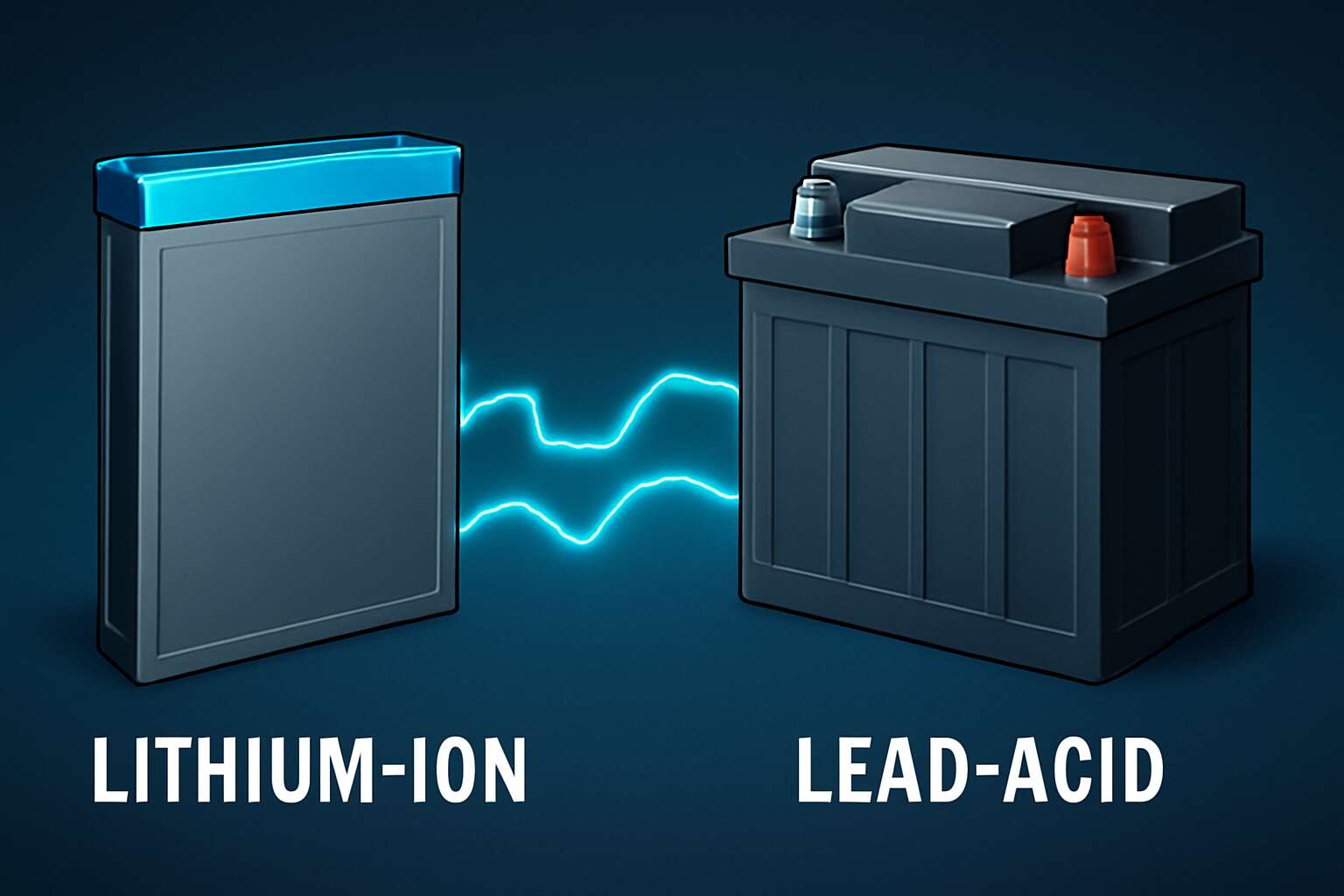
Understanding Battery Technologies
Lithium-based battery technology explained
Reality check: when you compare lithium versus lead acid batteries, the difference is more than weight. Lithium-based systems store more energy per kilo, charge faster, and handle deep cycling—perfect for South African homes juggling solar, outages, and a growing appetite for backup power.
Lithium-based battery technology explained centers on chemistry and smart management. Lithium-ion and LiFePO4 variants store more energy in smaller packs and rely on robust battery management systems (BMS) to balance cells and monitor temperature.
- Energy density and weight advantages
- Longer cycle life and total cost of ownership
- Faster charging and safer operation at varied temperatures
Together, these factors shape how readers in SA weigh the options for a modern energy setup.
Lead-acid battery technology explained
Signals of resilience rise when the power returns and the house hums with stability. In South Africa, outages shape daily planning, and lead-acid batteries have long been the workhorse of backup power. They endure heat, withstand rough handling, and offer a friendly price tag at the start. Yet they carry a heavier heart: more mass for the same energy, and a finite cycle life that grows testy during long outages.
Understanding their architecture helps: flooded, AGM, and gel each wear its own mask of strengths. They rely on tried-and-true chemistry and simple, rugged management by careful charging.
- Flooded lead-acid: cheap upfront, needs water top-ups and ventilation
- AGM: sealed, low maintenance, space-efficient
- Gel: stable in heat, sensitive to charging nuances
When weighing the choice between lithium versus lead acid batteries, many readers consider total cost of ownership, space, and maintenance.
Chemistry basics: cells, modules, and packs
Outages aren’t glitches; they’re the new normal in SA. Battery basics unfold in three layers: cells, modules, and packs. When you compare lithium versus lead acid batteries, knowing how these layers fit helps you gauge capacity, management, and longevity without getting lost in jargon.
Cells are the raw energy; modules group cells to hit the right voltage and current; packs wrap it all with safety, thermal management, and a control system. See the structure in practice:
- Cells: the energy units that determine chemistry and voltage per cell.
- Modules: blocks that scale capacity and current handling.
- Packs: the complete assembly with thermal control and monitoring.
For engineers and buyers, this layered view explains why lithium versus lead acid batteries behave differently under heat, charge rates, and depth of discharge. The cells, modules, and packs framework keeps the story clear—especially when South African readers weigh long-term reliability against upfront cost.
Performance and Efficiency Metrics
Energy density and weight considerations
Across South Africa’s diverse energy landscape, storage must balance capacity with weight. When you compare lithium versus lead acid batteries, energy density becomes the deciding factor: lithium systems typically deliver two to three times the energy per kilogram, allowing smaller, lighter packs with more usable capacity. That translates to longer solar runtimes, simpler installations, and leaner support structures—an advantage that matters in remote towns and urban rooftops alike.
- Energy density and usable capacity per kilogram (Wh/kg)
- Weight savings reduce mounting complexity and transport costs
- Cycle life and efficiency under real-world temperature swings
For South African projects, the weight-energy trade-off and long-term reliability often tip the scales toward lithium versus lead acid batteries, balancing upfront cost against ongoing performance.
Cycle life, calendar life, and degradation
In the heartbeat of South Africa’s solar frontier, a single stat can decide the fate of a remote microgrid: cycle life. When you weigh lithium versus lead acid batteries, endurance matters as much as capacity, shaping long-term reliability and maintenance in practical terms.
Lithium chemistries commonly deliver thousands of cycles at meaningful depths of discharge, far outpacing lead acid’s hundreds to a few thousand, depending on care. Calendar life runs longer too, often a decade or more for modern lithium packs versus five to seven years for traditional lead acids.
- Cycle life
- Calendar life
- Degradation drivers
In South Africa’s temperature swings, aging accelerates for all chemistries, but lithium’s higher round-trip efficiency and better tolerance of partial state-of-charge help it hold usable capacity longer when cooled and ventilated. Degradation remains a quiet thief, especially under relentless sun.
Charging profiles, efficiency, and fast charging implications
In South Africa’s solar frontier, performance is more than capacity—it’s reliability on demand. Charging profiles and efficiency determine how quickly a bank recovers after sunset and how little energy is wasted as heat. Whether lithium versus lead acid batteries can meet a site’s heartbeat under the SA sun hinges on charging behavior and thermal sensitivity.
Charging profiles show the split:
- Higher C-rate tolerance and better round-trip efficiency with lithium versus lead acid batteries cut charge times and energy loss (roughly 90–95% vs 80–85% under similar conditions).
- Fast charging is more forgiving with lithium, given proper BMS and cooling; lead acids heat and taper sooner, limiting pace.
In the South African context, ambient swings and ventilation strategies magnify these differences. The debate of lithium versus lead acid batteries continues to hinge on charging efficiency and life-cycle economics.
Operating temperature and environmental factors
Across South Africa’s solar frontier, daytime temperatures swing from 20°C to 40°C, enough to rewrite a battery’s performance curve. Performance and reliability on demand hinge on operating temperature and environmental factors, not just capacity.
In these conditions, the thermal envelope matters. Lithium-ion systems thrive with careful cooling and a tight thermal band; lead-acid packs falter as heat climbs, showing quicker capacity fade and slower recovery after sun-down.
- Ambient temperature swings, ventilation, and cabinet design shape charge efficiency.
- Fast charging is tempered by thermal limits; Li benefits from BMS cooling.
- Humidity and dust influence heat dissipation and corrosion, especially for lead-acid.
- Proper placement to avoid heat pockets improves performance in SA’s outdoor sites.
The choice between lithium versus lead acid batteries hinges on these thermal realities, balancing heat tolerance, ventilation, and the economics of cycle life.
Cost, Availability, and Total Ownership
Upfront cost trends and market availability
Cost is the first conversation most buyers have. Lead-acid batteries are cheaper upfront, but the gap closes as lithium versus lead acid batteries prices fall and efficiency climbs. In SA projects, I see customers moving toward lithium because longer life lowers annualized costs, even if the sticker price is higher at checkout.
Availability has improved as suppliers build SA distribution networks and service centers. Lead-acid remains easy to source, but lithium-based options are scaling rapidly for solar storage and microgrids here. For projects, market availability and lead times influence procurement as much as price.
Total ownership sums up the picture. Upfront costs may be higher with lithium, yet maintenance and replacement costs fall, boosting the long-term ROI. The market is expanding in South Africa, with warranties and local support steadily improving, making the long horizon more predictable.
Maintenance needs, warranties, and service considerations
The cost conversation often opens the ledger with a shadow. Upfront prices place lead-acid in cheaper territory, yet the gap narrows as lithium versus lead acid batteries price trends converge and efficiency climbs. For SA projects, longer life translates into lower annualized costs, even when the sticker price stares back from the checkout.
Availability has grown as SA distributors sprout networks and service centers. Lead-acid remains the easier quarry, but lithium-based options are scaling rapidly for solar storage and microgrids here. For projects, procurement hinges on market availability and lead times as much as price!
Maintenance needs, warranties, and service considerations shape total ownership. While upfront costs may hover higher for lithium, maintenance and replacements soften over time, smoothing the ROI curve in the long horizon.
- Warranty terms and transferability across sites
- Local service network and rapid response times
- Maintenance schedules and remote monitoring requirements
Total cost of ownership: replacement, downtime, and resale value
In South Africa, the true cost of energy storage isn’t just the sticker price. When you weigh lithium versus lead acid batteries, ongoing expenses and downtime often tilt the balance more than upfront quotes. While lithium carries a higher initial outlay, its longer life and fewer replacements can close the ROI gap over time.
Availability in SA has grown as distributors build networks and service centers. Lead-acid remains easier to source, but lithium options are expanding for solar storage and microgrids. Indeed!
Total ownership matters in a broader view: replacement cycles, downtime, and resale value all matter.
- Replacement cycles and calendar life
- Downtime costs from maintenance or failure
- Resale value and asset depreciation
This mix shapes who ultimately benefits from lithium versus lead acid batteries.
Application Scenarios and Use Cases
Residential energy storage and microgrids
Power writes the rhythm of life in South Africa; we’ve learned to turn daylight into daily resilience. In Residential energy storage and microgrids, homes become sanctuaries—quietly prepared for outages, quietly humming through peak tariffs, and gently empowering remote workers and families!
- Urban rooftops storing solar to power evening loads and electric vehicles
- Rural clinics and schools linked by community microgrids for reliability
- Off-grid farms sustaining irrigation and water systems during outages
In discussions about lithium versus lead acid batteries, the dream hinges on duty cycles, space, and service needs, shaping the tempo of a South African home.
Automotive, EVs, and energy mobility
Across South Africa’s roads and skylines, application scenarios for transport and energy mobility shape what a battery must endure. “Resilience runs on uptime,” a SA logistics planner insists, and that is the rhythm we chase when weighing lithium versus lead acid batteries for automotive and EV needs. Space, weight, and uptime are not abstract metrics—they decide whether a delivery hub stays lit or a rural clinic keeps its vaccines cold. In city fleets, compact form factors and rapid recharge matter; in energy mobility, durability under daily use becomes a quiet pillar of resilience.
Consider these scenarios:
- Urban last-mile fleets and two-wheelers requiring compact packs and dependable daily service
- Rural energy-mobility hubs blending solar charging with vehicle use
- Off-grid farms relying on mobile charging to keep equipment ready
These realities illustrate how the choice between battery families shapes SA’s mobility.
Industrial and grid-scale storage applications
Across South Africa’s industrial spine, outages are the rule, not the exception. Resilience means uptime that keeps lines running and data centers humming. The lens of lithium versus lead acid batteries is practical: which chemistry steadies the load when demand spikes?
Industrial and grid-scale storage unlock a spectrum of use cases: peak shaving for mining, backup power for critical infrastructure, and rural microgrids that blend solar with storage. In lithium versus lead acid batteries landscapes, dispatch speed and cycle resilience matter. Consider these scenarios:
- Utility-scale energy storage for regulation and arbitrage
- Backup power hubs for data centers and towers
- Rural microgrids powering clinics and schools
These realities show the right chemistry as context-driven and regionally tuned, shaping SA’s grids. The ongoing dialogue—lithium versus lead acid batteries—tracks demand, weather, and policy.
Portable devices and remote equipment use cases
In the field of portable power, the choice between lithium versus lead acid batteries matters as surely as a gauge on the road. Field technicians and rural clinics rely on compact packs for cameras, sensors, and radios that must endure heat, dust, and sudden outages; lighter lithium options offer better energy density and faster recharge, while robust lead acid models remain budget-friendly for simple tasks. The result is a context-driven decision that keeps essential operations humming through long shifts.
Portable devices and remote equipment shine in the field. Consider these use cases:
- Rugged field tablets and cameras for mining sites
- Portable medical devices at rural clinics and mobile clinics
- Remote telecom and weather-sensing equipment on the high veldt
Against this backdrop, the determination of chemistry comes down to weight, charging cadence, and resilience under heat. For South Africa’s dispersed operations, the right choice aligns with mission-critical uptime rather than upfront cost alone.



0 Comments