The Basics of Rechargeable Batteries
What Are Rechargeable Batteries and How Do They Differ from Single-Use?
At a dinner party, the conversation inevitably turns to load shedding. Someone boasts about their generator, another mentions their inverter. But the real heroes, the quiet workhorses of any backup plan, are the batteries themselves. Single-use batteries are the impulsive, charming guests who promise much but leave you in the dark, literally. They power a device for an evening, and then they are gone, destined for a landfill. A rechargeable battery, conversely, is the dependable friend who returns night after night, ready to do the heavy lifting again.
The financial arithmetic is simple, but the physics are even more interesting. A standard alkaline cell suffers from a high internal resistance. When you demand a lot of current, the voltage sags and the energy is lost as heat. Rechargeable chemistries, such as Nickel-Metal Hydride or Lithium-ion, are engineered to handle these heavy discharges much more gracefully. This makes them the superior choice for high-drain gadgets like digital cameras or portable LED work lights.
Here is where the distinction becomes critical for your solar setup:
– Initial Cost: Rechargeables have a higher upfront price.
– Longevity: They can be recharged hundreds of times.
– Waste: They dramatically reduce your environmental footprint.
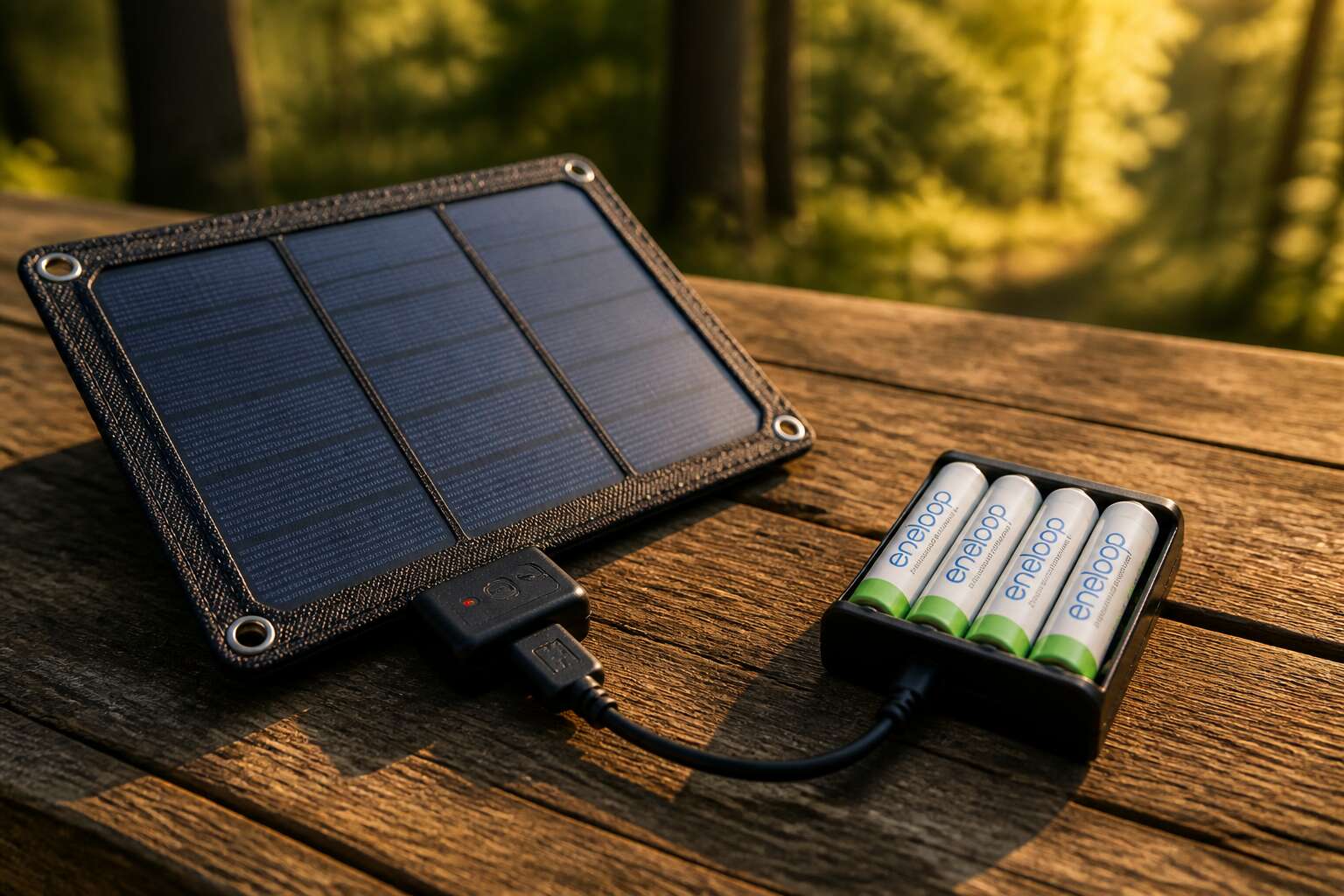
The true elegance of a rechargeable batteries solar charger is that it creates a self-sustaining ecosystem. You are no longer buying consumables; you are managing an energy cycle. The solar panel captures the sun’s rays, and the batteries store that energy for the next power cut. It is a shift in mindset from a throwaway culture to one of stewardship. You are not simply buying a product; you are investing in a system that pays dividends with every use.
Common Battery Chemistries: NiMH, Li-ion, and LiFePO4 Explained
Under the weight of Eskom’s endless dark intervals, the chemistry inside your battery decides how long the lights remain. Nickel-Metal Hydride cells are affordable and resilient. They handle moderate loads well. Yet they shed their charge steadily while sitting idle. Lithium-ion delivers higher energy density for portable devices, but it requires protective circuitry and careful management.
Then there is Lithium Iron Phosphate, known as LiFePO4. It endures thousands of cycles with minimal degradation. It resists thermal runaway. The cell is heavier than its counterparts, a minor concern for stationary storage. For a rechargeable batteries solar charger, LiFePO4 provides the enduring performance that load shedding demands. The other chemistries have their purposes, but understanding their differences prevents costly errors.
Key Specifications to Understand: Capacity (mAh), Voltage, and Cycle Life
When Eskom pulls the plug, your rechargeable batteries solar charger becomes the line between connectivity and silence. Three specifications determine its true worth.
Capacity, measured in milliamp hours (mAh), tells you how long the cell delivers power. A 3000 mAh battery outlasts a 1000 mAh cell by a wide margin. Voltage dictates whether your device operates correctly. Too low, and the gadget refuses. Too high, and components fail.
- mAh: the runtime you get per charge
- Voltage: the electrical pressure your device demands
- Cycle life: the number of recharges before the cell degrades
Cycle life deserves your attention. A standard cell might tolerate 500 cycles, which sounds adequate until load shedding consumes that in a single year. Look for a rechargeable batteries solar charger paired with a chemistry that endures thousands of cycles. Your future self, tapping a dead laptop in the dark, will appreciate the foresight.
How Solar Chargers Work with Rechargeable Batteries
Solar Panel Technologies: Monocrystalline vs. Polycrystalline
The sun in South Africa is relentless, and a rechargeable batteries solar charger must answer its intensity. The charger works by exposing photovoltaic cells to sunlight, which frees electrons in the silicon. Those electrons travel as direct current into your rechargeable batteries, filling them with stored energy.
The silicon itself determines how well this happens. Monocrystalline panels, cut from a single crystal, perform better under hazy or weak light. Polycrystalline panels, melted from multiple fragments, cost less but require stronger direct sun.
- Monocrystalline: efficient but pricier
- Polycrystalline: budget friendly, less efficient in shade
In my experience, this distinction matters when you rely on such a device during overcast days or the brief storms that sweep across the Highveld.
The Role of Charge Controllers in Safe and Efficient Charging
Inside every rechargeable batteries solar charger, the flow of energy follows a strict path. Sunlight strikes the photovoltaic cells and becomes current. That current does not enter your batteries directly. It passes through a charge controller, which reads voltage and adjusts the flow.
Without a controller, a Li-ion cell can overcharge, swelling until its casing splits. NiMH cells tolerate more, but they still degrade under uncontrolled current. In South Africa, where afternoon sun turns harsh without warning, this regulation determines whether batteries survive their first season.
The controller performs several tasks:
- Overcharge protection against voltage spikes
- Reverse current blocking after sunset
- Load disconnection when voltage drops too low
This is how a rechargeable batteries solar charger protects its payload during long stays in the wild.
Factors Affecting Charging Time: Sunlight, Panel Wattage, and Battery State
Understanding MPPT vs. PWM Controllers
The silent hum of a charge controller is the heartbeat of any off-grid power setup. It is the arbiter between the raw energy of the sun and the delicate chemistry of your cells. Without this vigilant guardian, you are simply inviting ruin upon your investment. The electronic lifeblood must be metered with precision.
The heart of the matter lies in the technology inside that controller. PWM, or Pulse Width Modulation, is the workhorse of the budget world. It operates like a simple gatekeeper, connecting the panel directly to the battery and using a simple on-off switch to maintain the voltage. However, this brute-force method squanders the potential of the panel.
MPPT, or Maximum Power Point Tracking, is the alchemist of the solar world. It performs a magical conversion, transforming excess voltage into extra current. This allows you to pair higher-voltage panels with your rechargeable batteries solar charger setup, drastically reducing wire losses and increasing efficiency. You can save up to 30% more energy from your setup compared to PWM.
Here is where your choice becomes clear.
– Consider MPPT if you face cold climates, have a larger budget, or need to run long cable runs.
– Choose a PWM controller for its lower cost if you have a smaller, 12V system where the voltage drop is negligible.
The right choice is not about good versus bad, but about matching the magic box to your specific energy totems. Each type has its place, but only one can claim the title of true efficiency.
Selecting the Perfect Solar Charger for Your Batteries
Assessing Your Power Needs: Devices and Usage Patterns
When the grid falters, as it does through load shedding, every watt matters. Selecting a rechargeable batteries solar charger begins with a truthful audit of what you must power. I keep a log: my laptop demands 60 watts for three hours, my modem sips 10 watts overnight, and my lantern burns five hours after dusk. Your devices differ, but the method remains. Measure each load’s wattage, count the hours of use, then total the daily requirement. That number, not marketing claims, dictates the panel wattage and battery capacity you truly need. Solar irradiance varies from Johannesburg’s highveld to the Karoo’s dry expanses, so no universal charger exists. Understand your patterns first, and the charger will follow.
Portability and Design: Foldable, Rigid, and Built-in Battery Options
Every rechargeable batteries solar charger must balance portability against durability. For a weekend drive to the Tankwa Karoo, a foldable panel slips into the boot alongside your cooler box. Rigid panels, however, endure hail and wind better on a permanent off-grid setup, but they need roof racks and extra muscle. Some units package a battery inside the panel itself, which sounds clever until you realise the cells are non replaceable.
- Foldable panels: light and quick to set up, yet the fabric wears over years.
- Rigid panels: sturdy and predictable, but heavier than you expect.
- Built-in battery options: convenient, though charging capacity stays fixed.
I keep a separate power bank for my modem and lights. A rechargeable batteries solar charger that suits your movement, not just your wattage, makes load shedding feel less like a crisis.
Ensuring Compatibility with Your Battery Chemistry and Voltage
Your battery’s chemistry dictates the voltage profile it must receive. LiFePO₄ cells sit at 3.6V nominal. Li-ion rests at 3.7V. NiMH comes at 1.2V. A rechargeable batteries solar charger tuned for one type can damage another. Overcharge causes gas and venting. Undercharge strands usable capacity.
Use this before you buy:
1. Read the battery label for chemistry and nominal voltage.
2. Check the solar charger’s voltage output range.
3. Confirm the charge controller has the correct cut-off voltage for your cells.
No two chemistries absorb power the same way. Send 14.4V into a NiMH pack and you risk cooking it. Send 12V into a LiFePO₄ pack and the cells may never fully refill. Matching voltage and chemistry matters. Save the battery first, then the sun does the rest.
Must-Have Features: USB Ports, LED Indicators, and Overcharge Protection
A solar charger without overcharge protection invites trouble. The rechargeable batteries solar charger you select should cut power automatically when cells reach full capacity. That feature prevents swelling, heat damage, and shortened lifespan.
USB ports matter for everyday use. A dedicated port delivers consistent output to phones and tablets. LED indicators show charging status clearly. You want to know when the sun is actually feeding your battery.
- Overcharge protection with automatic shutoff
- USB-A and USB-C output ports
- LED status indicators for charge level
The right combination keeps your rechargeable batteries solar charger working for years. Check the output rating on the USB port before trusting it with sensitive gear.
Budget vs. Performance: What to Expect at Different Price Points
Choosing a rechargeable batteries solar charger in South Africa often begins with a price tag, not a spec sheet. Entry level units, below R500, use polycrystalline panels and a single USB-A output. They charge slowly, and the stated capacity is optimistic. A phone might stop at 80% because the battery management system thinks it is full. This works for emergencies, not daily use.
In the R800 to R1500 band, you get monocrystalline panels, proper charge controllers,and standard overcharge protection. Your rechargeable batteries solar charger preserves its cells,and charging times drop. Above R2500, MPPT controllers and USB-C Power Delivery improve performance. These units handle overcast weather well,and last for years in rugged fabric.
Here is what price tiers deliver:
- Entry: portability at the cost of speed and accurate capacity.
- Mid: balanced efficiency with reliable safety.
- Premium: speed, durability,and smart charging.
Maximizing Performance and Lifespan
Proper Charging Practices: Avoiding Overcharging and Deep Discharge
Battery researchers report that overcharging alone can cut cycle life by half. For anyone using a rechargeable batteries solar charger, this is not academic trivia! It is the difference between three years of service and eighteen months of disappointment.
Deep discharge is equally destructive. Letting a Li-ion cell drop below 2.5 volts damages the internal structure. The battery may appear to recharge, but its capacity shrinks permanently.
- Disconnect the battery from the charger once it hits 100%.
- Plan solar use so the battery never rests at empty.
- Check your charger’s cutoff voltage settings regularly.
Your solar charger’s controller can protect against overcharging, but deep discharge demands human awareness. I tell my clients to build a routine around that. Pair that awareness with a sound charging routine, and you maximize your investment.
Storage and Temperature Guidelines for Optimal Battery Health
Temperature is the silent thief of battery longevity. In the South African climate, where direct sun can push surfaces past 60 degrees Celsius, a rechargeable batteries solar charger left in a bakkie’s cab is a death sentence. Heat accelerates the chemical decay inside every cell, permanently shrinking capacity. There is no recovery process. The damage is locked into the electrode structure.
Cold conditions present a different challenge, yet a rechargeable batteries solar charger is rarely the culprit here. At low temperatures, internal resistance climbs and voltage sags under load. A battery that operates flawlessly in summer may struggle to hold charge during a Karoo winter night. Discharge rates drop, and the device appears depleted even when ample energy remains stored.
When storing cells for extended periods, consider these conditions:
– Store at a partial charge, roughly 40 to 60 percent capacity
– Keep temperatures between 10 and 25 degrees Celsius
– Avoid humidity that can corrode terminals
– Check voltage every three months and top up gently
Selecting the right rechargeable batteries solar charger also means selecting one with a controller that can read temperature. Advanced units adjust cutoff voltage based on ambient conditions. This matters most in regions with dramatic seasonal shifts. A unit without thermal compensation overcharges in summer and undercharges in winter. Both outcomes shorten service life.
Monitoring temperature becomes part of the same routine as checking oil in an engine. The battery chemistry does not negotiate. Respect its limits, or accept the cost of early replacement.
Common Myths and Mistakes: Sunlight Angles, Partial Charges, and More
Most people assume that pointing a rechargeable batteries solar charger straight at the midday sun delivers maximum energy. The truth is more nuanced. Solar panels generate peak current when light strikes the surface perpendicularly, which in South Africa happens only for a brief window. For the rest of the day, the oblique angle costs you efficiency. A panel fixed at 30 degrees in Johannesburg loses over fifteen percent of its potential output by late afternoon. Adjusting the angle every few hours, tedious as it sounds, is the difference between a full cell and a half full one.
The second myth concerns partial charges. Some users cling to the belief that a rechargeable batteries solar charger must be drained completely before recharging, a habit inherited from old nickel cadmium cells. Modern lithium chemistry does not suffer from memory effect. In fact, shallow cycling extends lifespan. Committing to full discharges repeatedly stresses the electrodes. The common mistakes that shorten battery life are often those committed with good intentions:
- Leaving the unit charging past full capacity because “a little extra won’t hurt”
- Charging at extreme temperatures, especially right after removing the unit from a hot car boot
- Using mismatched cables that draw more current than the cell can safely accept
- Mixing old and new cells in a single unit, which forces the weaker cell to work harder
There is a psychological component to this. We want certainty in our energy reserves, so we overcompensate. Yet a rechargeable batteries solar charger handles better when treated with restraint. Letting the charge controller do its work without interference is the most reliable path to longevity. The unit you coax along with careful habits will outlast the one you push to its limits.
Orientation matters more than raw sunlight intensity. The South African sun arcs high in summer and low in winter, shifting approximately 40 degrees between seasons. A fixed mount that works in December will underperform in June. Tilt your panel toward the equator, but do not obsess over it. The real enemy is leaving the charger propped against a window, where glass filters out ultraviolet rays and the panel operates at a fraction of its rated output. Understand the geometry of your local light, and your rechargeable batteries solar charger will reward you with consistent, dependable cycles year after year.
Cleaning and Maintaining Your Solar Panel for Consistent Output
A clean surface is the silent partner of every watt your panel captures. Dust, pollen, and the stubborn residue left by morning dew form a film that scatters sunlight before it can reach the photovoltaic cells. For a rechargeable batteries solar charger, this film translates directly into lost energy and extended charging times. A monthly wipe with a soft, damp cloth is usually sufficient, but if you live in a dry or windy area, a more frequent rinse might be necessary to keep the glass clear and the output high.
Water spots can be just as obstructive as grime. When rainwater evaporates, it leaves behind mineral deposits that create a hazy effect, drastically reducing light transmission. Using a mild soap solution and a gentle squeegee after a prolonged dry spell helps maintain the optical clarity your panel needs to perform optimally. This simple upkeep routine ensures your solar charger maintains its rated capacity and delivers steady power to your rechargeable batteries, prolonging their overall health and readiness.
Environmental and Economic Benefits
Reducing Battery Waste and Your Carbon Footprint
Every year, millions of single-use batteries end up in South African landfills. The environmental toll is significant. Toxic heavy metals and corrosive chemicals leak into the soil and water table. Over time, this contamination affects local ecosystems and can even impact food sources. Switching to a solar charger with rechargeable batteries directly reduces this hazardous waste stream. You stop contributing to the perpetual cycle of manufacturing, shipping, and discarding.
The economic argument is equally compelling. While the upfront cost of a quality solar unit feels higher, the long-term savings are substantial. You buy a set of rechargeable batteries once. Then, you use the sun’s energy to power them for years. Consider the typical household devices that drain power quickly: wireless keyboards, gaming controllers, and flashlights.
– A single AA alkaline battery costs around R15.
– A standard 4-pack of rechargeable batteries costs around R200 but lasts for 500 cycles.
– Replacing disposables every month means spending roughly R720 per year on just one device.
– The rechargeable pack pays for itself in less than four months.
That math ignores the additional savings from using solar energy instead of grid electricity to charge the cells. You are effectively decoupling your portable power needs from Eskom’s load shedding schedule and rising tariffs. Every charge from the sun shaves a little off your monthly electricity bill.
This shift also reduces the demand for raw material extraction. Mining for lithium and nickel carries its own environmental burden. By using a rechargeable batteries solar charger, you stretch the utility of every mineral unit already mined. You extend the life cycle of the product embedded in the battery. It is a simple, measurable way to lower your personal carbon footprint without sacrificing convenience or performance. The result is a cleaner environment and a healthier wallet, powered entirely by daylight.
Long-Term Cost Savings Compared to Disposable Batteries
Here is the final count that matters: two data points separated by a single decision. The decision is to invest in a rechargeable batteries solar charger, and the data reveals the scale of that choice. A single disposable AA battery costs around R15. A 4-pack of rechargeable cells costs roughly R200, yet it endures for 500 cycles. The comparison is stark.
Consider a single device requiring a new battery monthly. That translates to R720 disappearing annually. The rechargeable pack replaces that entire expense. It keeps working through the years.
1. Disposable AA battery: R15, single use.
2. Rechargeable AA battery: R50 each, 500 cycles.
3. Estimated annual disposable cost: R720.
4. Rechargeable pack total cost: R200.
The rechargeable pack pays for itself in under four months. The sun then powers every subsequent charge, decoupling portable power from Eskom’s load shedding schedule. The environmental ledger improves, too. Each cell you recharge is another battery kept out of the landfill, its lithium and nickel stretched across years of use. Extending the life of the mineral unit already mined lowers your personal carbon footprint. The upfront cost is a footnote; the long-term savings are the headline.
Off-Grid and Emergency Use: Solar Chargers for Camping and Preparedness
When the grid fails and the braai coals are still glowing, the last thing you want is a scramble for torches with dead cells. A rechargeable batteries solar charger changes that reality. It turns sunlight into stored power, ready for the next outage or a weekend in the Cederberg.
The environmental ledger is straightforward. Every rechargeable cycle replaces a disposable cell that would otherwise end up in a landfill. One rechargeable AA, cycled 500 times, displaces 500 single-use batteries. That mineral footprint shrinks with each charge.
- Lanterns for load shedding evenings
- GPS and headlamps on multi-day hikes
- Radio communication during severe weather
Emergency purchases are expensive. A shopkeeper knows you need a torch battery when the lights are out. Keeping a charged set on a rechargeable batteries solar charger avoids that premium. The money stays in your pocket, and the kit stays ready for the next interruption.
Incentives and Rebates for Renewable Energy Accessories
The true value of a rechargeable batteries solar charger often crystallises after a year of ownership. The initial investment fades into the background as you tally the cost of the ten packs of alkaline AAs you did not purchase. Over a lifespan of several years, the arithmetic becomes compelling. A single rechargeable cell can replace hundreds of its disposable counterparts, which shifts the household budget line from a recurring expense to a one-time setup cost.
Beyond the immediate savings, the environmental impact is significant. The manufacturing process for single-use cells is resource-intensive, requiring mined metals and significant energy inputs. By relying on a rechargeable batteries solar charger, you directly reduce the demand for those raw materials. For the environmentally conscious South African household, this is a small but meaningful step toward lowering their personal carbon footprint. It transforms a daily power need into a sustainable loop that relies on the sun rather than the grid.
Convenience is the hidden currency of this technology. When load shedding strikes again, a drawer full of charged cells is a form of quiet insurance.
– You keep cordless tools operational for emergency repairs.
– You power portable radios for critical news updates.
– You keep rechargeable lanterns and headlamps at full brightness.
– You maintain battery-operated medical devices without stress.
These practical applications ensure that the money you saved on disposables also translates into preparedness. No frantic trips to the petrol station for overpriced batteries during a blackout. The unit pays for itself in saved fuel, time, and frustration.
Looking at the broader fiscal picture, some municipalities and energy efficiency programmes are beginning to recognise the value of solar technology. While specific rebates for a rechargeable batteries solar charger are not yet universal in South Africa, the trend toward incentivising renewable accessories is growing. As these incentives evolve, the return on investment improves even further. Ultimately, this is a purchase that aligns financial prudence with environmental stewardship, proving that off-grid preparedness does not have to cost the earth.



0 Comments