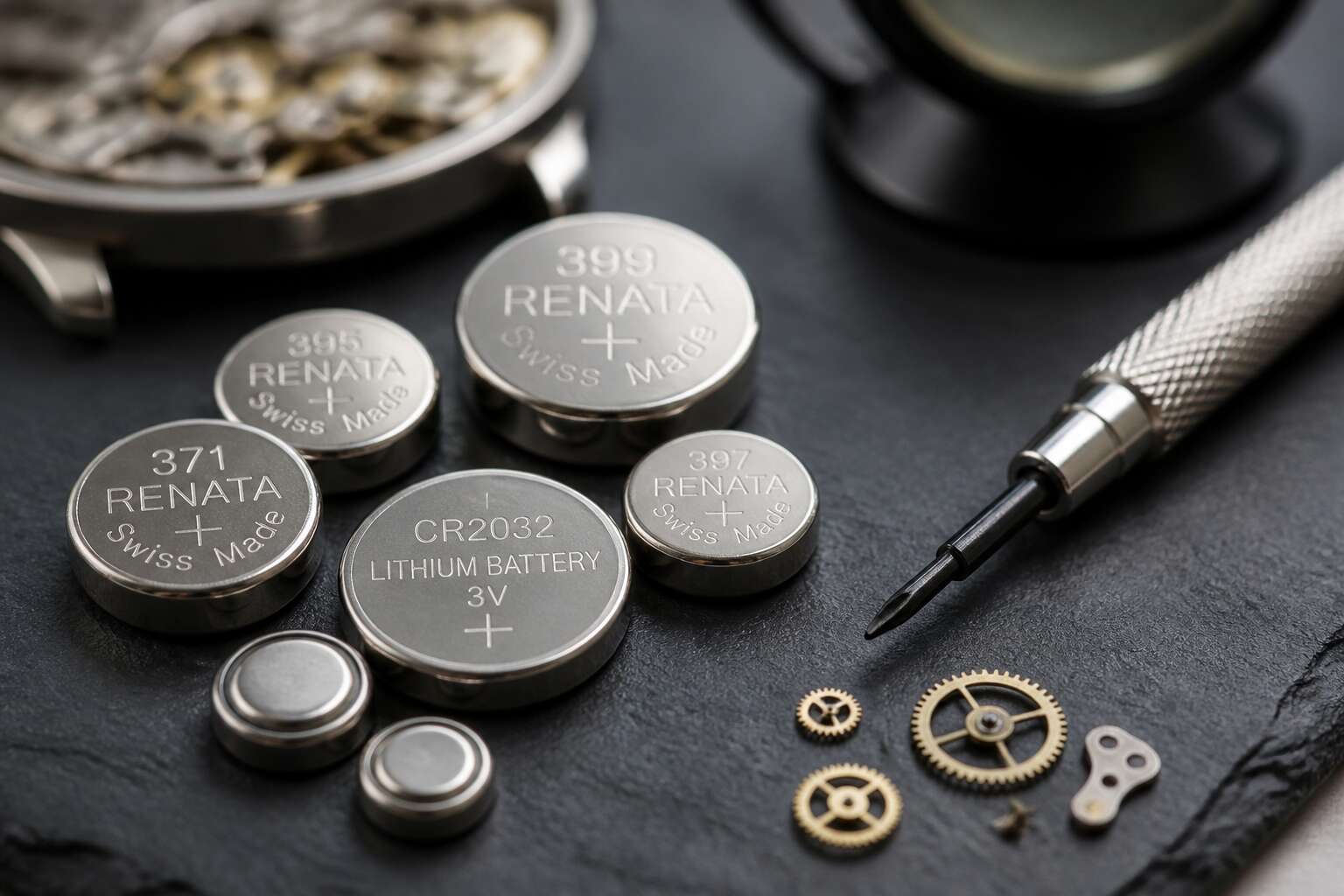
Types of Watch Batteries
Most people never think about the battery inside their wristwatch until it stops. That silence is a small betrayal. The average quartz movement runs for two to five years on a single cell, and when it dies, you have options. Batteries for watches generally fall into a few categories, and the right one depends on the movement and the power draw.
Silver oxide cells are the workhorses here. They deliver steady voltage and last longer than their alkaline cousins, which makes them the preferred choice for most analogue watches. Lithium batteries power the heavier stuff. They handle the high drain of chronographs and digital displays without sagging.
- Mercury cells are obsolete, and for good reason.
- Zinc air batteries are rare, mostly in older electric watches.
I have seen too many people abandon a perfectly good watch for want of a R50 cell. South Africans often struggle to find quality batteries for watches locally. Imported brands dominate the shelves, but local jewellers can fit a fresh cell in minutes.
How to Choose the Right Battery for Your Watch
Most watch failures are not mechanical. They are electrical. A dead cell hides behind a pristine dial. In South Africa, humidity and temperature swings accelerate battery degradation. Choosing batteries for watches demands attention to three characteristics.
- Voltage must match the movement’s spec.
- Diameter and thickness must fit the case.
- Silver oxide versus lithium alters the discharge curve.
Ignoring these invites corrosion. I have watched a leaking battery ruin a vintage piece beyond redemption. The right battery is never generic. Markings on the old cell tell a precise story. Calipers confirm the dimensions. That diligence separates a ticking watch from a display piece.
Step by Step Guide to Replacing Watch Batteries
A silent second hand is a small tragedy. That little piece of your daily rhythm, gone. The good news? Reviving it is simpler than you think.
I often hear people in Johannesburg or Cape Town dread this task, assuming it requires a specialist. The reality is, with the right tools and a steady hand, you can handle most standard quartz models right at your kitchen table. The entire process takes roughly ten minutes.
Before you start, gather your supplies. You will need a case opener, a pair of non-metallic tweezers, and a fresh battery. Buying the correct size is crucial, so check the old cell first.
Here is the basic procedure:
1. Locate the small notch on the case back. Use the case opener to gently pry it open.
2. Find the tiny retention clip holding the battery in place. Use your tweezers to push it aside.
3. Carefully lift the old battery out using your plastic tweezers. Never use metal, as it can short-circuit the movement.
4. Drop the new battery in exactly the same position, positive side up.
5. Release the clip and gently press the case back until you hear it click into place.
One crucial tip: always wear latex gloves or use a rubber finger cot. The natural oils on your skin accelerate corrosion on the metal contacts, shortening the life of your new cell. And if your watch is water-resistant, check that the rubber gasket isn’t cracked before sealing it shut.
If you live near the coast, the humidity is your enemy. Check the battery compartment for any white powder residue before installation, as this indicates moisture damage. For a simple malfunction, these steps will get you ticking again. But if the second hand still refuses to move, you are dealing with a deeper mechanical issue that will require a professional watchmaker.
Considering that quality batteries for watches are inexpensive, it is often more practical to attempt this fix yourself than to pay for a servicing. Weigh the cost of a cheap tool kit against the labour fee at a mall kiosk, and the answer becomes clear. Just remember to keep those delicate components clean and dry.
Watch Battery Lifespan and Maintenance Tips
The seconds hand on a fine timepiece gathers a quiet, glacial momentum. Yet inside that metal case, a tiny chemical heart labors, its pulse fading over three to five years. Here in our luminous, dry climate, that lifespan can shrink, as heat acts like an eager predator on the stored energy. The dance of replacement is a craft of small, precise hands.
A jeweller will often test the amperage, not just swap the cell. This detective work reveals the true state of the movement.
Your daily ritual matters more than you think. The crown, when wrenched against its threads, fights back. Be gentle.
– Remove the watch when adjusting the time. Pulling the crown while it is wet invites corrosion.
– Store automatics away from strong magnetic fields, like the speakers of a house party.
– Consider the battery tray. A poor fit causes intermittent contact and a sudden fatal stop.
The real lesson is humility. You cannot force the quartz; you can only provide a hospitable home. Trust a qualified professional to replace batteries for watches, as a hasty home repair often cracks the delicate stem or cracks the case seal. The best way to honour the machine’s quiet ambition is to observe its rhythm, feeling for the second where logic breathes. Choose batteries for watches that are high quality, for the cheapest cell is a false economy, a promise broken by a short, dim twilight.
Troubleshooting Common Watch Battery Problems
The little disc that powers a watch holds more tension than most owners expect. When your timepiece stops or runs erratically, the fault often lies with the batteries for watches. A mineral called silver oxide drives most modern movements, and its depletion is usually silent. The second hand might stutter for a day or two before dying completely.
Many people rush to replace the cell themselves, but a weak battery is rarely the only culprit. Check for these issues before you pry open the case back.
1. Verify the crown is fully pushed in.
2. Look for corrosion on the contact springs.
3. Ensure the battery sits flush against the terminal.
Resetting the movement after a stall often revives the watch, but only if the power cell delivers full voltage. A cheap replacement might fit, yet it drains fast and leaks. I have seen vintage pieces ruined by hasty swaps, the acid staining the dial beyond repair. For a dependable long term fix, choose a reputable brand and handle the cell with plastic tweezers, never metal. The oils from your fingers, or a scratch on the surface, can interrupt the circuit entirely. That tiny connection is the difference between a faithful companion and a dead weight on your wrist.
In coastal towns like Durban, humidity accelerates oxidation on the terminals. A routine service every few years keeps the seal intact and the batteries for watches working at peak capacity. A shopper often picks the cheapest option, complaining later about erratic timekeeping. The problem, however, is the oxidation on the positive terminal, not the cell itself. A simple wipe with a dry cloth restores the contact. Patience here matters more than force.




0 Comments