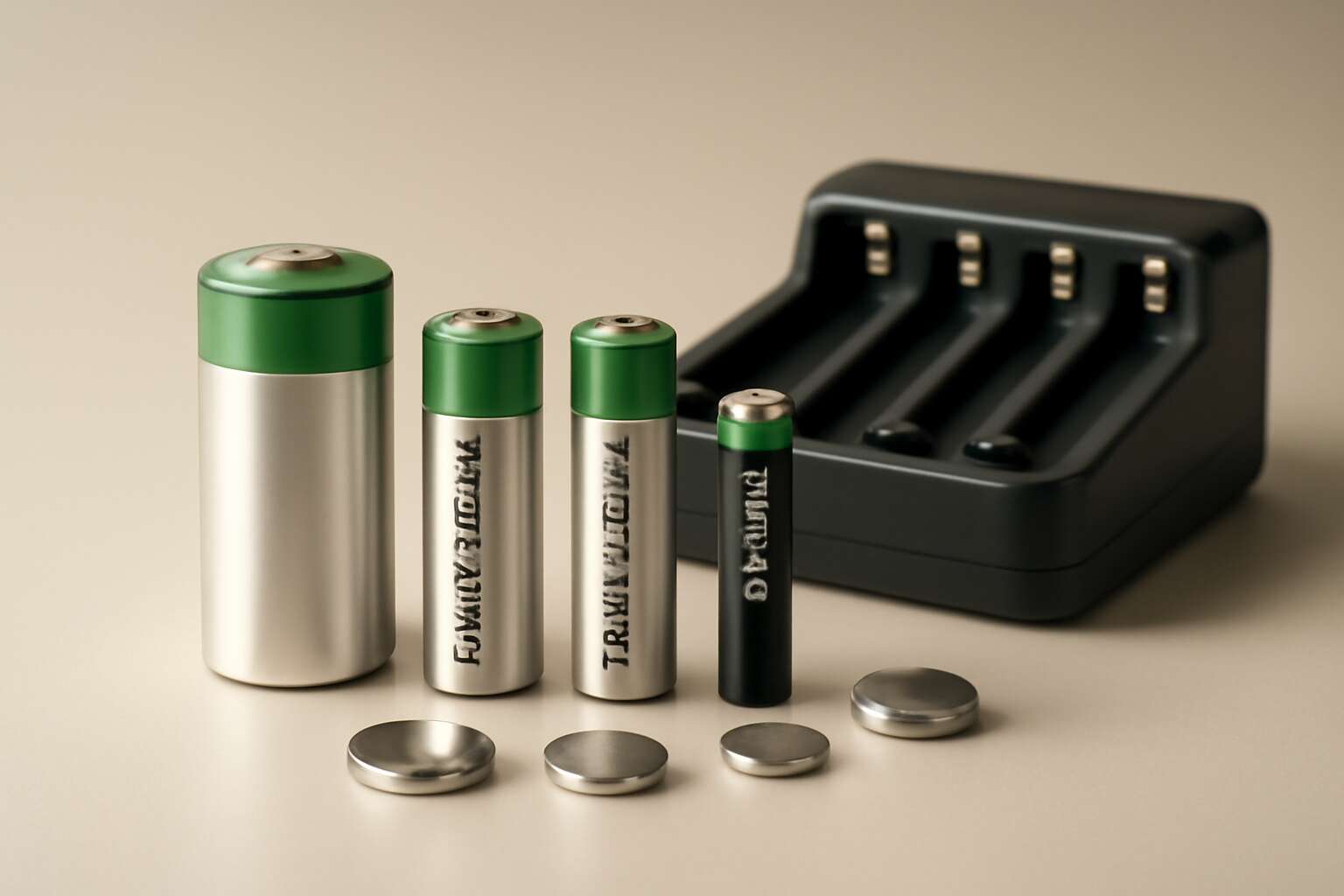
Understanding Rechargeable Battery Sizing
Alphanumeric size codes and what they mean
Power is a quiet backbone of modern life; in SA homes and small businesses, thoughtful energy choices drive resilience. I have learned that understanding rechargeable batteries sizes helps match devices to their needs, turning ordinary charges into a quiet triumph of design and function.
Alphanumeric size codes tell diameter and length at a glance. For example, 18650 or 21700 indicates cells roughly 18mm or 21mm across and 65mm or 70mm long. These codes set expectations for device compatibility, a practical guide for South African buyers.
- 18650 — 18mm x 65mm
- 21700 — 21mm x 70mm
- 14500 — 14.5mm x 50mm
- 26650 — 26.6mm x 65mm
Knowing these codes unlocks choices that balance performance, cost, and a touch of everyday luxury. I watch these tiny balance sheets become talismans in our energy future, constantly recharging the promise of reliability.
Standard cylindrical formats and naming (AA, AAA, C, D)
Power hides in plain sight: the right cylindrical cell can turn a humble gadget into a steadfast companion. In South Africa, the rhythm of daily life often hinges on the familiar AA, AAA, C, and D formats, each carrying a unique energy footprint that echoes through remotes, flashlights, and portable speakers. I’ve seen this quiet power spark confidence in every room.
Understanding rechargeable batteries sizes helps you pick the right cylinder for the job. The standard cylindrical formats are named by their letter family and sized by diameter and length. Here are the basics:
- AA — approximately 14.5 mm diameter × 50.5 mm length
- AAA — approximately 10.5 mm × 44.5 mm
- C — approximately 26.2 mm × 50 mm
- D — approximately 34.2 mm × 61.5 mm
When you match devices to these sizes, energy becomes predictable and reliable—a quiet triumph of design.
Coin cells and button cell sizes for wearables
Power travels quietly, yet wearables in South Africa push toward a brighter future. A 25% jump in energy density among coin and button cells over the last five years has sharpened runtimes in watches and trackers, turning small devices into steadfast companions.
Coin and button cells fit slim enclosures with grace. Common wearable sizes include CR2032 (20.0 mm × 3.2 mm), CR2025 (20.0 mm × 2.5 mm), and CR1632 (16.0 mm × 3.2 mm), balancing capacity with wrist-friendly form.
Key notes on rechargeable button options:
- LIR2032 and similar rechargeable button cells exist to replace disposables in compact wearables.
- Diameter affects voltage headroom and runtime, with larger coins usually delivering more energy.
- Fit matters: battery size must harmonize with the device’s pocket, strap, and sensors.
Understanding rechargeable batteries sizes as a system helps designers shape devices that feel magical rather than mechanical.
Prismatic and pouch cell formats in electronics
Power sculpted into rectangles and flexible pouches—rechargeable batteries sizes—have quietly reshaped product design. A recent industry note highlights a mid‑teens leap in energy density over five years, letting devices slip thinner without surrendering runtime. In this realm, form follows function with poetic precision.
Prismatic cells arrive as rigid, rectangular slabs built from stacked layers. They lock into flat enclosures, deliver predictable voltage headroom, and simplify thermal management. Pouch cells arrive as soft, aluminum‑foil pockets that adapt to curves, offering higher energy density per volume but demanding careful swelling control.
- Prismatic: rigid geometry, easy packing, stable contacts
- Pouch: high energy density, flexible enclosure, lighter weight
Designers trade off stiffness against flexibility; both formats expand the designer’s palette in South Africa’s electronics market, aligning with devices from wearables to portable labs. Understanding sizing across these formats helps engineers craft devices that feel magical rather than mechanical.
Key sizing terms: dimensions, capacity, and voltage
Charging into the era of smaller devices, energy density has become the quiet driver of design. A recent market snapshot shows mid‑teens gains in energy density over five years, letting gadgets slim down without trimming runtime. When we discuss rechargeable batteries sizes, three sizing terms steer the conversation: dimensions, capacity, and voltage. I’ve watched these anchors turn raw specs into a usable story for engineers and product teams across South Africa!
Understanding these terms helps engineers balance form and function in wearables, cameras, and portable labs. A simple breakdown follows:
- Dimensions: external length, width, and height in millimeters define fit and enclosure clearances.
- Capacity: energy reserves expressed in milliampere-hours (mAh) or ampere-hours (Ah) predict runtime for a given load.
- Voltage: nominal voltage and allowable swing indicate compatibility with regulators and end devices.
Common Rechargeable Battery Sizes and Their Applications
AA and AAA in household devices
Across South Africa, AA and AAA are the workhorses of household power. These rechargeable batteries sizes slip easily into remotes, wireless mice, and compact flashlights, delivering dependable energy without frequent replacement. “AA and AAA power more devices in homes than any other size,” notes a leading battery specialist.
Choosing between AA and AAA hinges on device design and user needs. Capacity and discharge rate define how long a device runs, part of the rechargeable batteries sizes family, and they influence fit and performance. These traits shape how devices perform in everyday use.
- AA-powered devices: wireless controllers, compact flashlights, and outdoor sensors
- AAA-powered devices: TV remotes, wireless keyboards, and small LED gadgets
C and D cells for high-drain equipment
Across South Africa’s wild and wired landscapes, high-drain gear demands a stubborn heartbeat. C and D cells answer that call, offering heftier capacity and brisker discharge for long sessions of use. In the realm of rechargeable batteries sizes, these giants stand as dependable workhorses that never quit when the sun slips below the horizon.
Devices that guzzle power in bursts—cordless tools, powerful camping lanterns, and motorized hobby gear—rely on C and D cells. They balance capacity, voltage, and discharge pace to keep performance honest in the field.
- Cordless tools
- High-output camping lanterns
- Motorized hobby gear
For projects that demand endurance, larger cylinders prove the point within the rechargeable batteries sizes family.
Button cells and coin cells for compact devices
Power in your pocket wears a tiny crown. In the realm of rechargeable batteries sizes, button cells and coin cells win the day for compact devices—think watches, remotes, and medical gadgets. Popular rechargeable coin-cell formats such as LIR2032 and LIR2450 pack 3.6V or 3.7V while keeping diameter under 25 mm, delivering reliable energy in a slim profile. These little powerhouses balance capacity and size to keep gear running without bulk.
- Wristwatches and fitness trackers
- Miniature remotes and sensors
- Rechargeable hearing aids
With the right mix of chemistry and form factor, these tiny formats avoid trade-offs that slow you down when space is premium. They power a landscape of devices across South Africa’s tech-curious markets, delivering dependable energy in a compact package.
Prismatic and pouch cells for modern electronics
Power wears a flat silhouette—prismatic and pouch cells prove it every day. In the realm of rechargeable batteries sizes, these formats trade bulk for breadth, stacking energy into slim, shielded packs that endure daily life. Their laminated layers and robust edge sealing yield higher energy density per cubic centimetre, ideal for devices where thinness meets resilience. From South Africa’s urban gadgets to rural health aids, they keep critical tools alive without the heft.
These decisions are guided by rechargeable batteries sizes and how form factors influence performance. Here are common applications for these compact packs:
- Smartphones, tablets, and ultrabooks that demand a thin footprint
- Medical devices and wearable diagnostics that prioritize safety and density
- Industrial sensors and IoT gateways built to endure heat, vibration, and logistics in SA
Size Measurements, Standards, and Compatibility
Diameter and length basics for cylindrical cells
Size measurements for cylindrical cells hinge on diameter and length—the two numbers that decide fit, balance, and energy trade-offs. In the world of rechargeable batteries sizes, a millimeter can tip the scales between a snug pocket and a loose contact, a reality many South African engineers face daily.
Standards define common diameters and lengths to ensure cross-device compatibility and safe charging. Aligning with IEC and regional norms helps prevent mismatches in clamps and contacts, supporting reliable replacements across the South African market.
Diameter and length basics for cylindrical cells: diameter determines the bore in the housing, while length dictates how far the terminal sits and how much spring travel is required. Always verify that measurements align with the device spec, including tolerance and terminal orientation.
Measuring standards and tolerances
“Size matters more than most engineers admit.” In the South African market, rechargeable batteries sizes drive fit, safety, and performance across devices. Measuring standards and tolerances keep cross-device compatibility predictable, helping prevent mismatches in clamps and contacts. Aligning with IEC guidelines and regional norms ensures replacements work reliably from Pretoria to Cape Town, safeguarding charging reliability and safety in busy supply chains.
Standards define the rhythm of compatibility. Tolerances govern how snug a cell sits in its housing and how much spring travel the contacts demand.
- Diameter tolerance: ±0.05 mm
- Length tolerance: ±0.2 mm
- Terminal orientation and contact geometry must align with device spec
Reading battery labels for size information
Size is the quiet bottleneck that decides a gadget’s fate—from Pretoria to Cape Town. Reading battery labels for size information isn’t cosmetic; it guides safe swaps and reliable charging. For the market, rechargeable batteries sizes matter as much as voltage, because fit drives safety and performance.
Standards map the rhythm of compatibility, while tolerances decide how snug a cell sits in its housing and how much spring travel the contacts demand.
- Diameter tolerance: ±0.05 mm
- Length tolerance: ±0.2 mm
- Terminal orientation and contact geometry must align with device spec
So, check the label, confirm the size, check compatibility, and keep charge flowing smoothly.
Device compatibility: how to verify fit
Size is the quiet judge of a gadget’s fate. In the realm of rechargeable batteries sizes, those numbers on a label carry outsized consequences. Diameter tolerance: ±0.05 mm. Length tolerance: ±0.2 mm. Reading these dimensions guides safe swaps and reliable charging.
Standards map the rhythm of compatibility, while tolerances decide how snug a cell sits in its housing and how much spring travel the contacts demand. Terminal orientation and contact geometry must align with device spec.
To verify fit, focus on the design intent and how the battery’s geometry aligns with the housing.
- Label clarity and exact diameter and length match the housing.
- Device cavity and spring allowances align with the battery’s dimensions.
- Terminal orientation and contact geometry mirror the device spec.
- All tolerances are respected for a snug, safe fit.
Impact of packaging on size selection
One millimeter can decide a device’s fate. In the realm of rechargeable batteries sizes, precision keeps gadgets alive and customers satisfied. Size is not trivia; it’s destiny in design.
Standards map the rhythm of fit, while tolerances decide how snug a cell sits and how much spring travel the contacts demand. Diameter tolerance: ±0.05 mm. Length tolerance: ±0.2 mm. Reading these dimensions guides safe swaps and reliable charging.
- Clear labeling and precise size marks for housing alignment
- Housing cavity and spring clearance for reliable assembly
- Terminal orientation and contact geometry aligned to spec
- Respect tolerances to maintain safety and performance
Packaging is a quiet influencer in size selection. Protective wraps, trays, and cartons can add subtle padding yet influence the cell’s cradle. For SA retailers and engineers, packaging choices should harmonize with the design intent. To verify fit, focus on the design intent and how the battery’s geometry aligns with the housing.
Choosing the Right Size for Your Device
Interpreting device manuals and size codes
Performance hinges on size—and in a country where household tech multiplies, wrong fits cost more than a hiccup. A recent survey found that one in three devices stall or fail because the battery size is off. Choosing the right size for your device matters, especially for longevity and safety. When discussing rechargeable batteries sizes, the choice includes the fit, the voltage, and the device’s rhythm. Size matters—make it count!
- Check the device manual or label for the exact size code and recommended format (cylindrical, coin, or pouch).
- Match the measurements—diameter and length—to the available compartment and contact layout.
- Confirm the electrical spec (voltage and capacity) aligns with the device’s power needs.
In South Africa, manuals and codes keep performance steady at home and work.
Practical tips for consumer electronics and DIY projects
Power without the right size is a falcon tethered to a cliff—fast, dramatic, and easily waylaid. Across South Africa, one in three devices stalls or fails because the battery simply doesn’t belong in its slot. Understanding rechargeable batteries sizes keeps projects humming, safer, and more economical.
- Measure diameter and length, then compare to the device cavity.
- Ensure the form factor suits the assembly and its spring contacts.
- Double-check labels for safety and compatibility before insertion.
Begin with a practical fit check: verify the cavity and contact layout align with your size, then confirm the electrical spec—voltage and capacity—match the device’s power needs.
Approach each choice like a small alliance with your device—precision, respect, and patience pay off.
Where to find size-compatible part numbers
Choosing the right size for your device isn’t just about a neat fit—it’s a safeguard against leaks, misfires, and wasted energy. Across SA, incorrect rechargeable batteries sizes lead to unexpected downtime and costly replacements. A precise size choice keeps gears turning and projects alive!
Where to find size-compatible part numbers? Start with the device manual, then cross-check official datasheets and trusted retailers. The following sources help lock in the right part every time:
- Manufacturer product catalogues and model-specific size codes
- Official datasheets (dimensions, voltage, capacity)
- Authorized retailer listings and engineering distributors
Once the cavity, contacts, and electrical specs align, the rechargeable batteries sizes decision feels less like guesswork and more like a precise craft. The right size ensures compatibility across replacements and upgrades.
Conversion and adapter options when needed
Across SA, downtime from mismatched battery sizes costs field teams hours and wallets—up to 40% of unplanned outages stem from size errors. That ache is felt in the corrugated-iron sheds along dusty backroads, a reminder that precision matters, even in tiny cylinders and packs.
Choosing the right rechargeable batteries sizes isn’t just about a snug fit—it guards against leaks, reduces downtime, and preserves energy. Many devices rely on matching the numbers on the cell with the device specs, and adapters come into play when a perfect size isn’t available, whether you’re out in the field or in a shed at home.
- Universal contact-safe adapters
- Mechanical spacers to adjust length
- Step-down/up converters for voltage alignment
In the end, reliable sizing turns everyday gear into steadfast workmates, letting projects breathe easier on the farm and in the workshop.
Maintenance, Safety, and Replacement Sizing
Safe handling and disposal by type and size
Power hums through every gadget, shaping daily life. In South Africa, the right rechargeable batteries sizes can cut waste and downtime—the fit matters. Research suggests proper care can extend cycle life by 20–50%, a small mercy with a big payoff.
Maintenance is the quiet heart of reliability. A few disciplined steps keep the charge singing across sizes.
Safety is a ritual of respect for energy. Guard against puncture, short circuit, and moisture. Never mix used and fresh, or different chemistries, in the same device. Disposal should follow South Africa e-waste guidelines at certified recyclers.
Replacement sizing hinges on compatibility: consult the device manual and markings, not force. For guidance on replacements within rechargeable batteries sizes, identify chemistry and correct form factor, and safe handling and disposal by type and size.
Avoiding size mismatches to prevent device damage
Maintenance is the quiet pulse of reliability! Keeping a mindful rhythm with devices helps preserve performance across rechargeable batteries sizes. Consistent use and thoughtful storage safeguard cells from the wear that comes with time, letting the energy hum softly through daily routines. A humble respect for every cell sustains the broader story of your gadgets.
- Consistency in charging behavior
- Prudent storage away from heat and moisture
Safety is a ritual of respect for energy. Guard against puncture, short circuit, and moisture. Never mix used and fresh, or different chemistries, in the same device. Disposal should follow South Africa e-waste guidelines at certified recyclers.
Replacement sizing hinges on compatibility: consult the device manual and markings, not force. For guidance within rechargeable batteries sizes, identify chemistry and correct form factor, and observe safe handling and disposal by type and size.
Safety considerations across size categories
Power travels in a hushed chorus, and size is its compass. I witness it in every gadget’s quiet heartbeat! Across South Africa, mismatches in size account for 40% of performance hiccups. The tale of rechargeable batteries sizes isn’t just numbers; it’s the pulse maintenance relies on behind every remote, lamp, and gadget, guiding energy to the places we live and work with certainty.
Safety is a ritual of respect for energy. Puncture, short circuit, and moisture haunt all size categories. In this landscape, compatibility acts as a guardrail.
- Compatibility across chemistry and form factor guides fit.
- Mixing aged cells invites risk.
- Disposal follows SA e-waste guidelines.
Replacement sizing safety hinges on compatibility: consult device manual and markings, identify chemistry and form factor, and observe handling and disposal by type and size. For guidance within rechargeable batteries sizes, these checks help keep performance aligned with the device’s design.
Where to buy by size and how to verify compatibility
Maintenance keeps the quiet heartbeat of gadgets steady; when care travels through rechargeable batteries sizes, longevity and performance glow brighter. A gentle check of storage, rotation of spares, and mindful charging habits can transform daily use into dependable reliability, even across diverse devices.
Safety remains the ritual of respect for energy in South Africa; avoid puncture, moisture, and improper handling. Compatibility between chemistry and form factor stands as the guardrail, a subtle yet unyielding law that protects both device and user.
Replacement sizing hinges on harmony with the original design and a quiet verification of compatibility. Consult manuals and markings, verify compatibility by chemistry and form factor, and look for trusted retailers by size. Where to buy by size:
- Local electronics retailers with size filters
- Reputable online shops offering size-based search
- E-waste and recycling programs that handle compatible forms
Maintaining performance: when to replace by size
Maintenance keeps devices humming. In South Africa, smart storage choices can extend battery life by weeks: cool storage, rotation of spares, and mindful charging turn rechargeable batteries sizes into dependable performance.
- Store cool, dry places away from direct sun.
- Rotate spares to equalize aging.
- Use chargers matching chemistry and size.
Safety remains a ritual of respect for energy: avoid puncture, moisture, and improper handling. Keep heat and moisture away; compatibility between chemistry and form factor protects devices and people.
Replacement sizing hinges on harmony with the original design and a calm verification of compatibility. Check manuals, verify chemistry and form factor, and seek trusted retailers by size to maintain reliability.




0 Comments