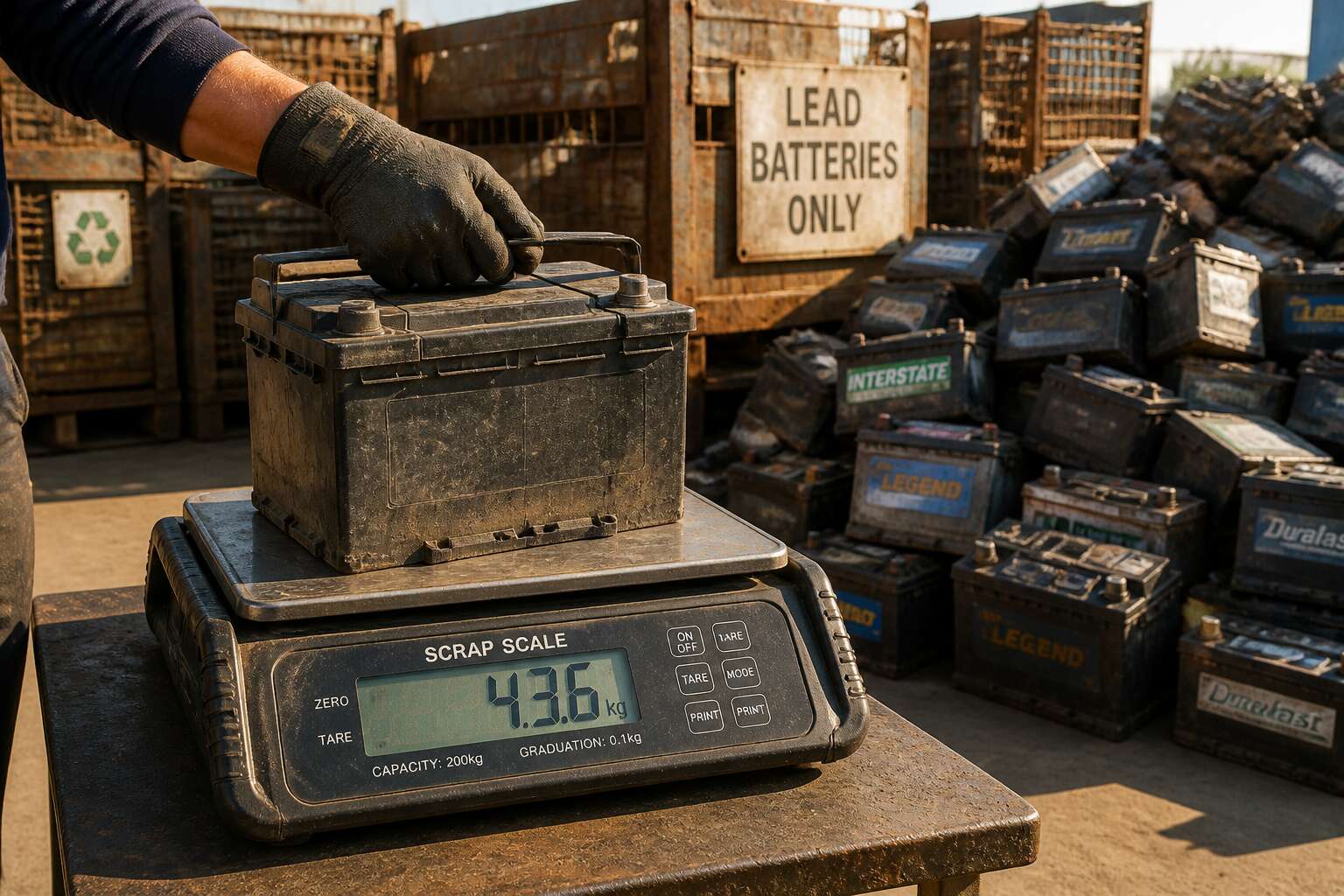
Key Factors That Influence Used Battery Pricing
Market Demand for Lead, Lithium, and Other Metals
Lead acid batteries dominate South Africa’s scrap yards, but their value shifts with global smelter demand. Lithium prices are more volatile, tied directly to electric vehicle production in Asia and Europe. When automakers ramp up, lithium cell scrap climbs. When they cut back, prices slump.
The scrap price for batteries reflects this metal by metal reality. A tonne of lead battery scrap tracks the London Metal Exchange. Nickel and cobalt add another layer, with stainless steel and aerospace markets pulling those values.
Consider what drives demand:
– Lead: construction and automotive replacement markets
– Lithium: EV battery gigafactory output
– Nickel and cobalt: stainless steel and superalloy manufacturing
Every one of these factors moves the scrap price for batteries in South Africa’s yards, often within the same week.
Global Supply Chain and Recycling Industry Dynamics
The journey from a spent battery to a usable commodity is rarely straight. Shipping routes, port congestion, and export regulations all shape what a South African yard can offer. When container freight costs spike, the scrap price for batteries often dips, because processors abroad pay less to justify the haul.
Recycling technology matters equally. Older smelters extract less value from each unit, so they bid conservatively. Facilities with modern hydrometallurgical processes can afford to pay premiums, which nudges the scrap price for batteries upward.
A few dynamics dominate:
– The availability of local smelting capacity versus reliance on overseas buyers
– Environmental compliance costs that differ by province
– The pace of battery collection networks across urban and rural areas
These forces, often invisible to the seller, quietly set the ceiling and floor for every deal.
Seasonal Fluctuations and Economic Conditions
July in Johannesburg is a tough month for battery sellers, and the weather is not the only reason. The scrap price for batteries tends to slump when winter slows vehicle usage and replacements. Summer heat, by contrast, accelerates battery failures, which nudges pricing upward. This seasonal pattern often escapes the casual seller’s notice.
Economic conditions add another layer of unpredictability. Interest rate hikes alter the opportunity cost of holding spent batteries, so replacements get postponed. A volatile rand complicates matters further, and I have watched quotes shift on a single news headline. The price then depends on a handful of local indicators:
- Inflation rates that alter inventory carrying costs and replacement timelines.
- Petrol prices, which affect driving frequency and battery wear.
- Unemployment figures, as they dictate who can afford a new battery at all.
These forces combine quietly, making each quote a small mystery!
Regulatory Impacts on Battery Disposal and Trading
The scrap price for batteries depends on details that hide between the terminals. A single cracked casing can drop a pallet’s value by a fifth. Lead content matters, but so does the absence of free acid and plastic separators. A clean, drained battery commands a premium, while a corroded leaker loses weight and trust.
- Intact terminals and dry surfaces reduce handling risk.
- A drained battery with sealed vents is safer, but it weighs less.
- Mixed batches with copper lugs or iron hardware invite deductions.
In South Africa, the National Environmental Management: Waste Act and municipal bylaws impose a compliance cost that quietly pushes the scrap price for batteries downward. Registered recyclers must carry permits, keep manifests, and report every ton. I have seen a trader lose an entire contract over a missing waste transport document. These overheads do not appear on the weighbridge, but they shape every offer.
Different Battery Chemistries and Their Value Ranges
Lead-Acid Automotive Batteries
The standard lead-acid automotive battery, common under the bonnet of South African sedans and bakkies, contains lead plates submerged in sulfuric acid electrolyte. Its true worth lies in that metal, and the weight of the unit determines the payout. A typical 12-volt passenger battery holds roughly 8 to 10 kilograms of recoverable lead. That mass directly shapes the scrap price for batteries. Commercial units from trucks or inverters simply carry more plate material.
A single battery’s value hinges on several physical traits:
- Termination style, since top post versus side terminal affects how quickly processors strip it
- Total weight including sediment, because dirt and debris dilute the lead fraction
- Casing integrity, as cracked housings leak acid and reduce the net yield
These factors separate premium scrap from mixed loads. The scrap price for batteries in South Africa tracks these grades closely, rewarding clean, intact units that recyclers can drain and crush without delays. Older brands often command a slight premium because their internal grids are thicker, a detail returned sellers notice immediately.
Lithium-Ion Batteries from Electronics and EVs
Lithium-ion units from laptops, power tools, and electric vehicles form a separate value tier entirely. Unlike lead-acid, their worth depends less on sheer mass and more on cathode chemistry. Nickel manganese cobalt (NMC) cells from EV packs pay differently than lithium iron phosphate (LFP) units. South African scrap merchants weigh these distinctions daily.
The scrap price for batteries in this category moves with cobalt and nickel spot markets. Small electronics batteries often arrive shredded and mixed, which lowers the payout. EV packs, by contrast, hold substantial cathode material per kilogram, and processors pay accordingly.
Things that shift the valuation:
- Cell voltage verification, since damaged cells are worth less
- Whether the pack includes intact wiring and busbars
- Origin of the battery, as OEM packs command premium rates
That last point shapes my own advice to regulars at my local yard. A clean EV pack with documented history beats a pile of phone batteries, and the scrap price for batteries reflects that gap immediately!
Nickel-Cadmium and Nickel-Metal Hydride Varieties
Nickel-cadmium batteries are the stubborn relatives of the battery family. They remember every charge cycle, hold grudges, and refuse to die quietly. Their scrap price for batteries often depends on cadmium content, which demands special handling and makes yards cautious. Nickel-metal hydride units, by contrast, behave more politely. They offer less hazardous material but still contain valuable nickel that processors recovers.
Value differences show up in how these batteries are sorted:
– Sealed NiCd packs from power tools often meet a low per kilo rate because cadmium recovery costs money.
– Industrial NiCd units with heavy plastic casings pay differently than bare cells.
– NiMH cells from hybrid vehicles carry rare earth metals, which shifts the valuation upward.
The local yard’s scale tells the truth quickly. A bag of mixed NiMH cells might outperform a pile of NiCd cores, but both remain a side note compared to modern chemistries. Todays scrap price for batteries reflects that hierarchy, so do not expect retirement fund numbers from these old workhorses.
Alkaline and Household Battery Considerations
Alkaline batteries, the common power source for remote controls and flashlights, hold little appeal for scrap buyers in South Africa. Their steel shells and manganese and zinc cores cost more to process than the recovered materials are worth. I have watched scrapyards decline them, because the scrap price for batteries of this chemistry rarely covers the logistics.
Household lithium coin cells and button batteries present a different calculation. They carry concentrated metal value, but only in bulk. Collectors need volume, sorting discipline, and a patient relationship with processors.
- Mixed alkaline packs: often zero value at the scale.
- Sorted lithium coin cells: small, fluctuating payouts per kilogram.
Each kilogram of household batteries demands careful separation. The effort rarely rewards the casual seller.
Industrial and Forklift Battery Scrap Rates
Industrial and forklift batteries sit at the heavier end of the scrap spectrum. A typical forklift unit is a lead-acid block weighing several hundred kilograms. The casing, the lead grids, and the sulfuric acid all factor into the payout. Most yards in South Africa quote the scrap price for batteries of this class per kilogram, but the total transaction matters more than the rate. I have watched a single unit change a seller’s week. The weight compounds the base rate.
Value ranges shift with the metals market. Forklift batteries track regional lead prices closely, while industrial lithium packs from backup systems appeal to different buyers. These batteries hold energy density that lead cannot match, and processors pay for that density.
- Sealed lead-acid industrial units: steady demand, moderate per kilogram rates
- Industrial lithium packs: higher rates, only with certified discharge documentation
- Nickel-iron or Edison cells: niche buyers, inconsistent pricing
That last category rarely moves. The effort to sort and present these batteries determines what the scrap price for batteries actually delivers.
How to Accurately Check Today’s Market Rate
Utilizing Online Metal Price Trackers and Indexes
The scrap price for batteries shifts more often than most sellers expect. A tracker that refreshes hourly reveals a gap between the global index and local yard offers. The LME cash price drives most lead quotes. For lithium, the index comes from Asian benchmarks. Nickel and cadmium follow separate cycles.
To get an accurate figure today, check two sources: an international exchange feed and a South African dealer list. I have seen yards hold a quote for 48 hours. Cross reference the exchange rate. The USD to ZAR conversion often explains the lag.
- The live LME or Fastmarkets page for the specific metal.
- The local dealer index from MRA or similar recycler lists.
- The SARB daily exchange rate to convert the quote to rand.
The scrap price for batteries on a yard’s board may be a day old. Online trackers show the live number, and the difference matters when you sell a ton.
Contacting Local Scrap Yards for Real-Time Quotes
A phone call to a scrap yard reveals the scrap price for batteries faster than any dashboard. The yard’s buyer knows today’s intake, not yesterday’s index. Ask for the rand per kilogram quote and the date it applies to. Most yards hold that number for a single business day.
I have found the rate varies by yard within the same city. One dealer may pay for the lead content only. Another might factor in the plastic casing. Ask which components the quote covers. Then compare three yards before you load the vehicle.
- Call during midweek mornings when dealers finalise their daily rates.
- Request the quote in writing via WhatsApp or email.
- Confirm whether the rate applies to drained or sealed units.
The scrap price for batteries you receive over the phone becomes your negotiating floor. Bring that quote to the yard and ask for a match. Real-time contact removes the guesswork.
Understanding Weight, Purity, and Condition Metrics
A 55Ah lead-acid battery weighs 15 kg, but the scrap price for batteries rarely matches gross weight. The yard’s scale reads gross, yet the quote uses net lead content. That gap is where sellers lose money.
Weigh a unit on a calibrated scale before loading the bakkie. Remove handles or straps not part of core cell. Extras skew projection. The yard’s scale is final, but you need your own number to negotiate weight metrics.
Purity measures lead alloy composition. Condition covers drained versus sealed units and cracked cases. A cracked case leaks acid and drops the rate. A sealed unit saves labour costs.
- Gross weight includes casing, terminals, electrolyte.
- Net lead weight is what smelters value.
- Purity varies by type; deep-cycle units have higher tin.
Bring specification sheet for your model. That sheet gives a baseline for the quoted scrap price for batteries, even if the yard disputes your scale.
Best Places to Sell Your Used Batteries for Cash
Local Scrap Metal Recyclers vs. Specialized Battery Processors
The difference between a local scrap yard and a specialized processor often surprises Durban sellers. Local scrap metal recyclers offer an immediate payout, yet their valuation is a blunt instrument. They weigh the unit, but the quote rarely reflects the complex internal chemistry.
Specialized battery processors operate differently. They dismantle the unit to harvest specific metallic fractions, utilizing focused recovery methods. Because they extract more value per kilogram, their payment scale is notably steeper. This is where the true scrap price for batteries emerges, driven by extraction efficiency rather than simple bulk.
- Local yards: Speed and convenience, often with a flat rate per kilogram.
- Processors: Comprehensive handling, yielding superior per-kilogram returns.
Choosing the right venue demands a quick enquiry. A phone call to verify whether your specific battery chemistry is processed in-house can add real rand value to each transaction.
Auto Parts Retailers and Core Buyers
Auto parts retailers and core buyers value units differently. They pay for the unit’s remanufacturing potential, not its metal mass. A battery with intact casing and terminals fetches a premium because it can be reconditioned! This pushes the effective scrap price for batteries above standard yard rates. I have seen sellers receive significantly less cash by overlooking these buyers.
These buyers track specific models for warranty exchanges and rebuild programs. Their quotes are fixed per unit, often independent of metal prices. A quick check of local retailers reveals:
- Exchange value on your old casing
- Cash or store credit for lead-acid units
- Immediate removal of your old unit
Sometimes the best route is a direct call to a core buyer, not a scrap yard. Their payment for cores often exceeds the standard yard quote in rand.
Online Marketplaces and Mail-In Recycling Programs
Online marketplaces offer a different avenue. Platforms like Gumtree and Facebook Marketplace connect sellers directly with hobbyists and small recyclers. These buyers often pay above the standard scrap price for batteries because they value specific models for restoration or personal projects.
- Gumtree classifieds for local pickup
- Facebook Marketplace groups for automotive parts
- Bidorbuy auctions for competitive bidding
I have seen sellers fetch double the local yard rate by posting clear photos and accurate weight details. Mail-in recycling programs provide another route. Some South African companies supply prepaid shipping labels for used batteries. You package the unit, send it off, and receive payment once the battery is weighed and verified. This option suits sellers in remote areas where scrap yards are scarce.
The scrap price for batteries on these platforms varies with demand. Online auctions can push prices up when multiple buyers compete. Mail-in programs offer fixed rates, but the convenience justifies the difference. Check shipping costs before committing. Heavy batteries can reduce your final payout.
Direct Sales to Battery Manufacturers
Most people never think to contact the factory that made the battery in the first place. Direct sales to battery manufacturers cut out the middleman entirely. South African producers like Willard and First National Battery operate buyback desks for used units heading into their smelting operations. They pay the scrap price for batteries based on weight and lead content, with no commission shaved off by a third party collector.
This route requires volume. A single car battery rarely justifies the paperwork, but a bakkie load of old truck cells or a pallet of forklift units changes the conversation. You call their procurement office in Germiston, Durban, or Cape Town, ask for the current gate rate, and confirm whether they take sealed or drained units. Some facilities pay a modest premium for clean, separated lead plates.
The tradeoff is administrative. You need proof of ownership and a VAT invoice if you run a registered business. Remote sellers often find it exhausting, yet the rand value per kilogram beats most local yards.
Comparing Offers and Negotiating for Higher Payouts
The first number a scrap yard quotes you is rarely their best number. That is the opening bid in a quiet negotiation. I have learned to ask for the scrap price for batteries over the phone, then push back with a simple question: “Is that the best you can do?” Often, the response is a hesitant pause and a slightly better figure.
Comparing offers requires three or more quotes on the same day. Rates shift quickly, so a quote from last week is worthless.
Use these levers when negotiating:
- Ask whether the published rate applies to your battery type
- Offer to bring the batteries in drained and clean
- Commit to repeat business if the price is right
The scrap price for batteries from scrapyards in Germiston, the Vaal or Durban can vary significantly. Let them compete for your load.
Proven Strategies to Maximize Your Payout Per Pound
Proper Sorting and Separation of Battery Types
Proper sorting determines your final payout. When you separate lead-acid from lithium-ion, you secure the scrap price for batteries. Mixed loads force buyers to apply a discount rate that reduces your return. I have watched sellers lose twenty percent simply because a few alkaline cells slipped into the wrong crate!
Start with a clean workspace. Group batteries by chemistry first, then by condition. Use bins for cracked casings or corroded terminals. A label system prevents contamination.
– Strip any plastic or metal casings that are not integral to the core unit.
– Remove terminal connectors and copper lugs before weighing.
– Keep wet and dry batteries apart to avoid leakage and safety penalties.
Each separated pile shows the buyer exactly what they are paying for. That clarity often shifts the quoted rate upward.
Cleaning and Preparing Batteries for Inspection
First impressions govern the scrap price for batteries. A grimy casing obscures the manufacturer stamp, the voltage rating, and the date code. Buyers in Johannesburg and Durban have told me they discount dirty loads because inspection takes longer. Surface corrosion on terminals is the usual culprit.
Neutralise any acid residue with a baking soda rinse, then dry the unit completely before it hits the scale. Standard preparation before inspection includes:
- Brushing terminals with a steel wire brush
- Removing plastic clamps that add tare weight
- Wiping the casing to expose the original label
These steps take minutes, yet they routinely lift the scrap price for batteries. Clean metal weighs heavier in the buyer’s mind. The offer sheet reflects that clarity.
Timing Your Sale with Price Peaks
Scrap metal traders in Johannesburg have seen the scrap price for batteries move by as much as 15% within a single quarter. That kind of swing rewards patience. Timing your sale means watching the consumption cycles of smelters, which typically spike just before industrial production ramps up. When those facilities signal demand, the offered rate per pound climbs.
Monitor the local market for these indicators of an approaching peak:
- A sudden shortage of battery cores at nearby collection points.
- Smelters announcing temporary shutdowns for maintenance, which tightens supply.
- An uptick in lead futures on international exchanges, which buyers often mirror within days.
Selling after a price list update, often issued on Wednesdays, lets you capture the freshest quote. Stale offers from Monday mornings rarely reflect the peak. Wait for the right window, and the scrap price for batteries rises without extra effort.
Building Long-Term Relationships with Reputable Buyers
Reputable buyers do not publish their best rates. They reserve those figures for sellers they trust. In Johannesburg, a buyer who has weighed your cores for years will often pay a premium above the listed scrap price for batteries, simply because you have removed the risk of contamination from his supply chain.
I have watched informal sellers jump between yards for a rand more per kilogram, only to receive lower grades on inspection. The regular supplier gets the cleanest quote. What separates a strategic relationship from a casual transaction?
- A buyer who flags pending smelter maintenance before the market shifts.
- Payment terms that settle within 48 hours of weigh-in.
- Transparent deductions for moisture or non-lead materials.
That consistency compounds. When the scrap price for batteries climbs, established sellers receive the first call, not the last.


0 Comments