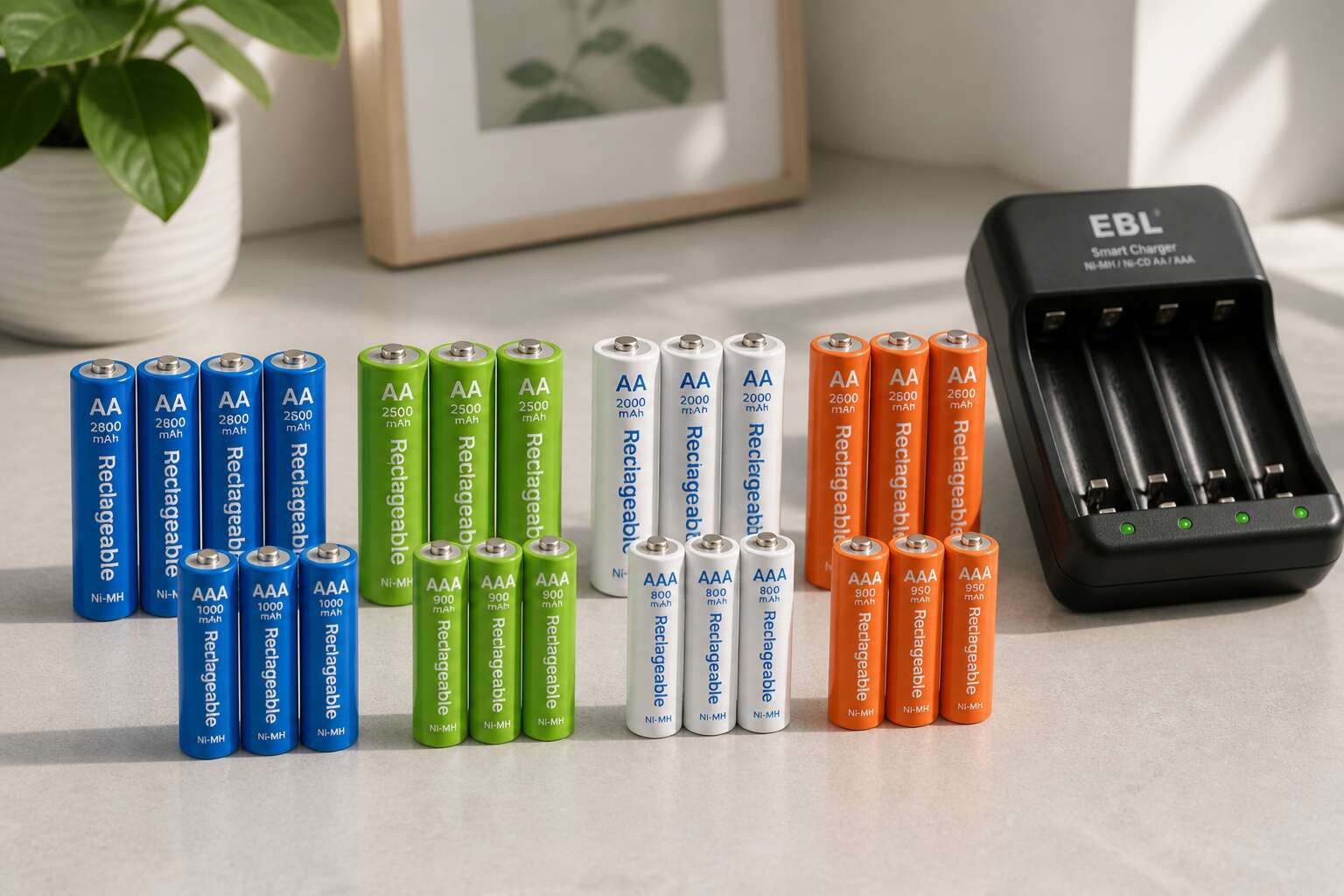
Comprehensive Guide to Multi-Pack Rechargeable Batteries
Why Choose a Variety Pack Over Single-Type Sets
Most households in South Africa own at least three devices that take different battery sizes. That reality makes a rechargeable batteries variety pack more practical than buying single-type sets. You get AA, AAA, C, D, and 9V cells in one box, so you can power a remote, a clock, and a lantern without extra trips.
Single-type sets force you to guess. A rechargeable batteries variety pack removes that guesswork and often costs less per cell. I keep a mixed set on hand to reduce clutter and avoid dead devices.
- AA batteries suit high-drain cameras
- AAA batteries fit small remotes
- C and D cells handle torches
- 9V batteries work in smoke detectors
Understanding Battery Chemistries in Assorted Kits
South Africa runs on rechargeables! The average home juggles four different battery sizes, yet most chargers pretend one chemistry fits all. Your choice of a rechargeable batteries variety pack matters because each cell type hides a different personality. NiMH cells dominate AA and AAA sizes, handling high-drain devices like digital cameras with grace. Lithium-ion variants appear in 9V shapes, where they deliver steady power but demand a compatible charger.
Consider what you are mixing:
- NiMH for everyday AA and AAA tasks
- NiZn for high-voltage bursts in cameras
- Li-ion for compact 9V smoke detectors
This pack should respect these differences. A universal charger may not support every chemistry, so pair accordingly.
Common Sizes and Formats Found in Mixed Packs
Open any drawer in a South African home and you will find a tangle of loose batteries that no longer fit any device. A rechargeable batteries variety pack solves this mismatch, but only when you understand the physical formats inside.
The common sizes follow a simple logic. AA and AAA cells share similar voltage, yet AAA saves space in slim devices. C and D cells, while bulkier, hold more capacity for high-drain toys. The 9V format remains the outlier, often needing a separate bay in the charger.
- AA for wireless microphones
- AAA for TV remotes and LED candles
- C and D for lanterns and radios
- 9V for smoke detectors and multimeters
When you select a rechargeable batteries variety pack, remember that physical size does not dictate charging needs. A charger that accepts AA may not accept a 9V li-ion. Check the bay spacing and polarity markers before you commit.
Cost-Effective Benefits of Bulk Assorted Purchases
Purchasing a rechargeable batteries variety pack in bulk transforms a recurring expense into a single investment. The price per cell drops when you buy assorted quantities, outpacing the cost of disposable replacements within three charge cycles. For my household, this arithmetic becomes compelling!
Consider the savings beyond the unit price. A mixed pack consolidates shipping and packaging overhead, relevant for online orders in South Africa where delivery fees often exceed the battery cost. You reduce emergency trips to the corner store, where premium alkaline brands carry steep markups.
- One set powers high-drain devices like gaming controllers
- Another set serves low-drain gadgets like wall clocks
- Spares remain stored for load shedding nights
The real value lies in usage density. When you own a rechargeable batteries variety pack, every device in the home draws from the same pool, so no cell sits idle. This rotation extends the lifespan of the entire kit.
Key Features to Evaluate Before Buying an Assorted Rechargeable Kit
Capacity and Voltage Consistency Across Cells
When you open a rechargeable batteries variety pack, the first number to scrutinise is the milliampere hour rating. A 2000mAh cell paired with a 2800mAh cell in the same device forces the weaker battery to drain first. That mismatch shortens overall runtime and stresses the chemistry.
Voltage consistency across cells matters just as much, especially in South Africa where load shedding makes us rely on torches and radios. If one battery in a two-cell device reads 1.2 volts and its partner reads 1.0, the stronger cell compensates and overheats. Check the label before buying any rechargeable batteries variety pack; reputable brands state capacity tolerances clearly.
- Compare the rated capacity printed on each cell
- Test voltage across all batteries at full charge
- Ensure the same chemistry throughout the kit
Cycle Life and Longevity Expectations
A battery rated for 1000 cycles will lose a fifth of its capacity by the time it reaches that milestone. That is why the cycle life printed on a rechargeable batteries variety pack matters more than the packaging gloss. I have tested kits where the marketing promised years of service, yet the small print revealed a 300 cycle ceiling. In South African summer heat, electrode degradation accelerates, shrinking that figure.
Longevity expectations also hinge on storage. Cells resting in a hot garage lose charge retention faster than those kept indoors. Quality assorted kits specify cycle life per chemistry. Nickel metal hydride cells usually manage 500 to 1000 cycles, while lithium ion variants exceed 1000.
- Check the cycle rating printed on each wrapper
- Note the temperature range of your storage space
- Prefer kits with cells from the same production batch
Cells inside a single rechargeable batteries variety pack age unevenly. The charger, the draw rate, and your usage patterns all shift the real world outcome.
Charger Compatibility and Included Accessories
Most households own at least one spare charger. The real test of a rechargeable batteries variety pack is whether its cells match the charger you already own. Lithium ion cells require a constant current, constant voltage profile. Nickel metal hydride cells need a different charging algorithm. A mismatch means reduced capacity or a shorter lifespan.
Check the slot configuration before you commit. A pack that advertises eight cells but expects you to buy a separate charger is less of a value than it appears. Some kits include a multi bay charger, spacers, and storage cases.
Consider the following:
– Does the charger handle each chemistry separately?
– Are the included accessories rated for South African mains voltage?
– Does the kit specify a charging current that suits your typical draw rate?
A rechargeable batteries variety pack with the right charger compatibility saves you from buying another gadget. The accessories matter less than the charging algorithm, but they still shape the final cost.
Safety Certifications and Protection Circuits
South African regulators recall faulty battery packs every year. A rechargeable batteries variety pack with no protection circuit is a gamble. Look for cells with overcharge, overdischarge, and short circuit protection. These safeguards prevent heat buildup and voltage collapse.
- Overcharge protection halts charging at the ceiling voltage.
- Overdischarge protection cuts load before cell reversal.
- Short circuit protection limits current surges.
Certifications matter more than the number of cells. A rechargeable batteries variety pack that carries the SABS mark or the IEC 62133 standard has undergone independent testing. Lithium cells require a protection circuit board to manage current flow. Nickel metal hydride cells rely on simpler thermal cutoffs. Inspect the packaging for the NRCS letter of authority when buying locally.
Brand Reputation and Warranty Coverage
It is a peculiar truth that the cheapest rechargeable batteries variety pack often becomes the most expensive, once replacements and failures are counted. In South Africa, established brands maintain local distribution networks that streamline warranty claims. Obscure imports vanish from shelves within months. A two year replacement warranty matters only if the supplier remains reachable.
Brand reputation in this sector reflects quality control discipline. Manufacturers with decades of cell production invest in electrode purity and separator consistency. Their rechargeable batteries variety pack may cost more, but the failure rate drops considerably.
Consider the warranty terms:
- Does it cover individual cells or only the kit?
- Are shipping costs for returns included?
- Is the claim process local or requires international posting?
Clear answers to these questions determine whether the coverage delivers actual value. A written warranty from a distributor with physical premises beats a vague promise from an online marketplace any day.
Environmental Impact and Recycling Options
Tens of thousands of spent batteries reach South African landfill sites every year, dissolving slowly into the ground. To avoid adding to that burden, evaluate the physical terminals of a rechargeable batteries variety pack before buying. Nickel plated contacts resist humidity and frequent handling far better than plain steel. The manufacturing date also matters. Cells sitting on a shelf for over six months surrender some capacity before they ever power a device.
Recycling options deserve equal consideration at the point of purchase. South Africa’s National Environmental Management: Waste Act treats batteries as hazardous waste when discarded alongside household rubbish. Organisations such as the South African Battery Recycling Association accept a rechargeable batteries variety pack, but each chemistry demands a separate recovery route. Municipal collection points vary across provinces, so confirm the nearest accredited facility ahead of time. Recovered cells yield nickel, cobalt, and other minerals that otherwise require fresh mining.
Popular Configurations and Applications for Mixed Rechargeable Cells
Household Devices: Remote Controls, Toys, and Flashlights
I live in a home where the TV remote and a toy dinosaur compete for attention. The remote wants AAA cells. The dinosaur wants AA cells. A rechargeable batteries variety pack covers both. One purchase, two sizes, no more searching for the right cell.
Remote controls typically take two AAA cells. Toys with motors eat four AA cells. Flashlights vary, some use a single 18650, others stick to C or D. This assortment matches each device without extra orders.
Consider common configurations:
- Remote controls: 2 AAA cells
- Toys: 4 AA cells
- Flashlights: 1 x 18650 or 2 C cells
A rechargeable batteries variety pack solves the daily scramble. Your remote and your toy dinosaur can coexist.
Photography and High-Drain Equipment Needs
Professional photography is unforgiving. A camera flash can drain a set of AA cells in a single session. Wireless triggers, speedlights, and external battery grips each demand specific cell configurations. A rechargeable batteries variety pack simplifies the loadout. One kit supplies the varied formats a photographer carries.
High-drain devices share a common trait. They require bursts of current, not gentle trickles. Consider these common examples:
– Speedlights using 4 AA cells
– Wireless transceivers using 2 AAA cells
– LED video panels using 8 AA cells
These tools fail silently when voltage sags. Mixed packs with pre-charged cells help. A photographer swapping cells between a flash and a receiver avoids the scramble. The variety pack becomes an essential part of the gear bag. For creatives working on location, dependable power is the quiet underpinning of every shot.
Outdoor Gear and Emergency Preparedness Kits
For outdoor gear and emergency preparedness kits, a rechargeable batteries variety pack is essential. Headlamps, GPS units, and portable weather radios each demand different cell formats, and mixing them prevents power failure at critical moments.
Consider these configurations:
- A two-way radio running on 4 AA cells
- A handheld lantern using 3 AAA cells
- A compact emergency charger powered by a single 9V cell
A small pouch of assorted spare cells earns its place in any camping setup. The weight is negligible, and the security is immeasurable. My emergency kit always has extras tucked beside the medical supplies. Power disappears quickly when conditions turn difficult, and preparation matters.
Gadgets and Everyday Electronics: AA, AAA, C, and D
Consider the average South African household. The television remote asks for AA cells, the wireless mouse prefers AAA, and the portable radio still demands C or D. This is where a rechargeable batteries variety pack proves its worth. One package, every format, zero trips to the garage shop!
A mixed cell assortment means the right power source is always within reach. I keep a small tray by the desk with each size separated. It saves arguments during load shedding.
For everyday electronics, configurations tend to cluster around specific formats:
- Digital scales and wall clocks often use AA
- Gaming controllers frequently use AA or AAA
- Old-school lanterns and boomboxes still take C or D
The arrangement matters as much as the chemistry. When each device gets its exact size, everything runs longer.
Specialty Batteries: 9V and Button Cell Alternatives
Most households overlook the 9V battery. Smoke detectors, guitar pedals, and multimeters still depend on it. Button cells fade until a car key fob goes silent.
That is why a rechargeable batteries variety pack deserves a second glance. It includes these specialty formats with the usual cells. Consider the hidden costs. Buying disposables for an alarm system every few months adds up. A single 9V rechargeable replaces dozens.
For button cells, options are niche. Many watches and hearing aids use them. But not all are rechargeable. Check packaging carefully.
Here are common specialty applications:
- 9V for smoke detectors and security panels
- Button cells for key fobs and medical devices
- 9V for analogue multimeters and effect pedals
The trick is matching the right cell to the device. A rechargeable batteries variety pack solves this without hunting through four different stores. Load shedding makes this even more critical.
Best Practices for Maximizing Performance and Lifespan
Proper Charging Techniques for Mixed Chemistry Packs
South Africa’s frequent load shedding puts a rechargeable batteries variety pack under strain. Misunderstanding charge curves across mixed chemistries accelerates degradation. For NiMH cells, avoid overcharging by selecting a timer or delta V cutoff. Li-ion cells require constant current and constant voltage, never a trickle charge. I prefer a smart charger with per slot monitoring to prevent cross chemistry confusion.
- Store cells at 40% charge in a cool dry place.
- Cycle full discharges only for NiMH memory correction, not for Li-ion.
- Check terminal temperature during charging; above 40 degrees Celsius signals trouble.
Matching cell voltages before inserting a multi pack avoids reverse polarity damage. Use the same chemistry for series loads to prevent imbalances. These small habits extend the rechargeable batteries variety pack’s useful life significantly.
Storage Guidelines to Prevent Self-Discharge
Keeping a rechargeable batteries variety pack in top condition requires rotation and temperature control. I rotate spare cells through my devices every month. This prevents one battery from aging faster than the others. Store the pack in a dark, dry spot below 20 degrees Celsius. Warm locations accelerate self-discharge.
Self-discharge is inevitable, but you can slow it down. NiMH cells lose up to 30 percent of their charge in the first month. Li-ion cells are slower, yet both suffer when left fully charged. Set the pack to 40 percent capacity before long storage. Check the voltage every six weeks!
- Keep cells out of devices that sit unused.
- Place the variety pack in a sealed bag to block humidity.
- Avoid metal drawers that can short terminals.
These practices keep every cell balanced. When load shedding hits, the rechargeable batteries variety pack delivers without surprises.
Identifying and Replacing Failing Cells in a Set
One worn cell drags down the entire set. In a rechargeable batteries variety pack, the oldest or most abused cell determines when the group stops working. I mark each cell’s wrapper with its purchase date and measured capacity. This takes minutes and stops a fresh battery from being drained by a tired neighbour.
When a device dies sooner than expected, test the whole set:
- Swap each cell, one at a time, into a device you know works.
- Measure resting voltage after 24 hours.
- Note which cell heats up during charging.
The failing cell reveals itself quickly. Remove it immediately. Replace it with a cell of identical chemistry from the same rechargeable batteries variety pack, and keep matched pairs together.
Mixing old and new cells in one device causes the weak cell to reverse polarity and damage the others.
Disposal and Recycling Protocols for Old Batteries
Statistics show lithium-ion cells lose about 20% of their capacity after 500 charge cycles. In South Africa, where grid interruptions make batteries essential, this wear compounds quickly. Routine care determines whether a rechargeable batteries variety pack serves for months or years.
I keep terminals clean and dry, because corrosion creates resistance that forces the whole set to labour harder. Store cells partially charged in a cool spot. Heat accelerates internal chemical breakdown.
- Monthly terminal checks with a dry cloth prevent resistance buildup.
- Even usage rotation across cells balances wear.
- Swelling, discolouration, or odour signals immediate retirement.
Disposal demands more discipline than most users assume. A rechargeable batteries variety pack in South Africa contains metals destined for dedicated recycling streams, not household bins. Municipal drop-off points and retailer take-back programmes recover nickel, cobalt, and lithium. This prevents groundwater contamination and feeds future production cycles.
Tips for Pairing Batteries with Equal Charge Levels
A single undercharged cell forces healthy companions to overwork, accelerating wear across the entire set. This mismatch reduces battery longevity, particularly in South Africa where repeated grid interruptions demand dependable power.
Pair batteries with equal charge levels. Use cells from the same rechargeable batteries variety pack batch and charge them together as a group. Never mix a fresh cell with a half-depleted one, because the voltage gap creates internal stress and heat.
- Label each cell with its purchase date.
- Charge all batteries in a set simultaneously.
- Measure voltage monthly with a multimeter.
Even rotation across devices prevents one cell from working harder than its siblings. This discipline extends lifespan noticeably.
Troubleshooting Common Issues in Variety Packs
A dead flashlight during a scheduled power cut is a common frustration, yet it often traces back to how we manage our cells. Many users treat a rechargeable batteries variety pack as a collection of independent units, but they perform best when considered as a cohesive pool. This becomes critical when load shedding disrupts regular charging routines, forcing you to juggle partially depleted cells. The key is to establish a rhythm where you group batteries by their usage history and not just their visual condition.
For example, taking four AA cells out of the same pack and using two in a camera and two in a wall clock will lead to different discharge rates. To keep things running smoothly, you should track which batteries are in active rotation.
- Dedicate specific slots in a storage case for your active set.
- Mark the date of first use on the battery with a permanent marker.
- Swap out the entire set in a device when the power fails, rather than just one cell.
When a battery in your assortments quits early, the issue is often internal resistance rather than total failure. A cell that heats up excessively during a charge cycle is a warning sign. You should remove that unit before it damages the charger or the neighboring cells. Similarly, if a device starts working intermittently, test the voltage of every battery in the series, not just the one that looks faulty. Replacing a single weak link with a fresh one without also replacing its tired partners will cause the same problem to return quickly. Seclude the suspect cell and verify its performance over a full cycle before reintroducing it to the set. This isolation method prevents a single bad unit from degrading the entire stock.



0 Comments